
Food safety training in Africa starts with people. Rules and standards only work when people understand them. This guide offers a practical approach to building skills across the continent. It covers why training matters and how to design it well. Moreover, it addresses individual, organizational, and system-level needs. Whether you work in a ministry or a small business, this framework helps you right away.
Why Food Safety Training in Africa Matters
The scale of the challenge is significant today. The WHO food safety strategy aims to cut foodborne diseases by 40% by 2030. To reach this, 35 countries need updated food safety laws by 2027. Additionally, 23 nations require stronger disease monitoring systems by the same date. As of 2022, only a few countries meet these goals. Unsafe food already costs Africa $110 billion yearly in lost productivity and healthcare.

Training alone does not close every gap. However, it remains a critical part of the solution. Our food safety training in Africa program provides practical, scalable guidance for institutions at every level. Here is why food safety capacity building in Africa matters now:
- Informal markets handle most food. Most Africans buy from small shops or open markets. Therefore, these vendors need practical training that fits their daily reality.
- Regulatory capacity is often stretched. Inspectors and lab staff need ongoing skills development. Short workshops are simply not enough for long-term success.
- SMEs face unique pressures. Small businesses often lack resources for food safety specialists. Training helps them build internal capacity step by step.
- Trade requirements are rising constantly. Countries face growing pressure to meet international standards for export. Training on Codex and SPS measures supports better market access.
- Africa's food import bill is large. The continent imports around $100 billion in food annually. Stronger systems reduce dependency and improve competitiveness.
In short, training builds the knowledge that makes systems function. It turns paper standards into real-world actions.
Who Needs Food Safety Training in Africa
Effective programs recognize that different groups have unique roles. Therefore, training must target specific learning needs for each audience.
Food Safety Training for Regulators and Inspectors
Food control officers require specialized skills. They need training on risk-based inspection approaches. They must also apply national laws and Codex Alimentarius texts correctly. Sound sampling and testing methods are essential. Furthermore, clear communication with the public matters for trust. Explore our food safety training in Africa for regulators and inspectors to see how we approach this audience.
Food Safety Capacity Building for Ministries and Institutions
Government agencies need training on system design and governance. They benefit from better coordination between different ministries. Policymakers must manage SPS issues and trade concerns. In addition, emergency response and surveillance require constant updates. See how the food safety training in Africa approach supports policy design and institutional capacity.
Food Safety Courses for Food Businesses and SMEs
Small businesses need GMP and GHP basics first. HACCP training in Africa helps these firms control hazards early. ISO 22000 training Africa programs build robust management frameworks. Clear documentation and traceability are also required. These courses should fit both domestic and export markets. Learn more about the food safety training in Africa program for SMEs.
Capacity Development for Development Partners and NGOs
These groups design programs and track results carefully. They must align their work with national priorities. Supporting sustainability beyond project timelines is a key goal. Our food safety training in Africa framework helps partners measure and sustain system-level impact.
The Three Levels of Capacity Development in Africa Food Safety
Lasting change requires a balanced approach. We use the FAO capacity development framework to address three distinct levels. Apply these levels with our food safety capacity building in Africa guidance.
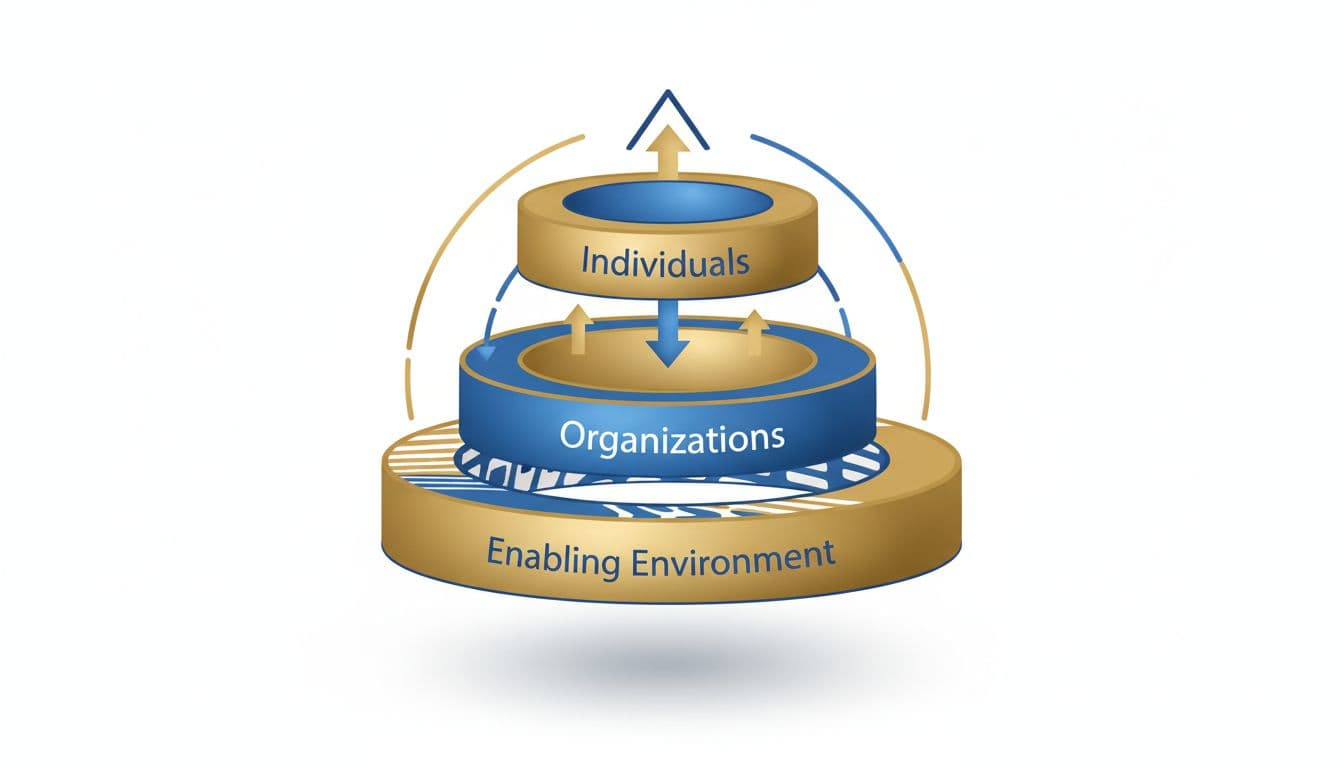
Level 1: Individuals
This level focuses on knowledge, skills, and confidence. Food safety training in Africa works best when it stays concrete. It helps professionals understand exactly what to do. Practical actions in daily work follow after good coaching.
Level 2: Organizations
Systems and management drive performance at this level. Well-trained people struggle in weak structures. Therefore, training focuses on internal management and teamwork. It also improves compliance documentation and records.
Level 3: The Enabling Environment
Laws, policies, and incentives shape the field here. This training targets decision-makers and senior officials. It covers governance and regional harmonization. Sustainable funding models are also a primary focus.
When programs address all three levels, impact lasts. Conversely, gains fade if you only target individuals.
A Practical Roadmap for Food Safety Training Programs in Africa
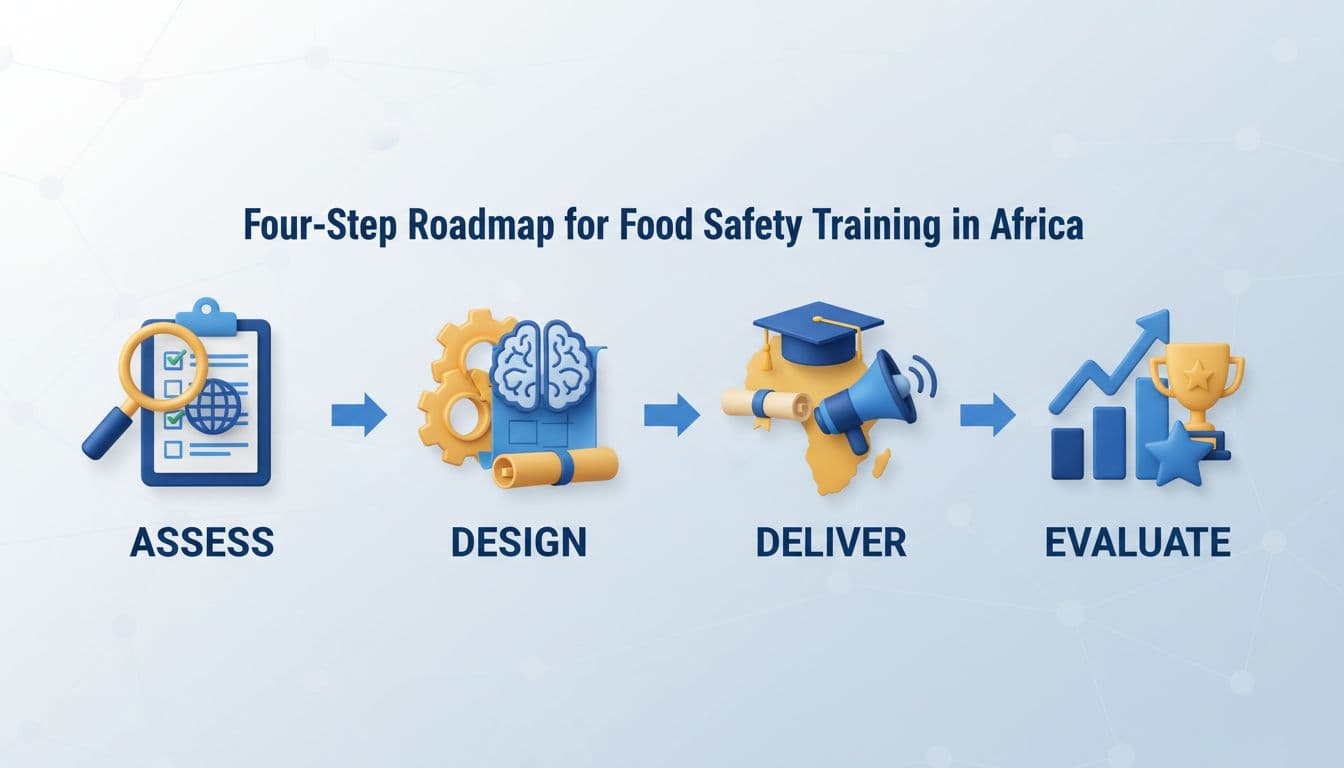
Use this roadmap to structure any program effectively. It works for government agencies and small businesses alike. For a practical walkthrough of each step, refer to the food safety training in Africa page.
Step 1: Assess Training Needs
Start with a clear picture of the gaps. Identify who needs training and on what topics. A good needs assessment prevents generic, ineffective programs.
Step 2: Design the Program
Create content that fits the specific audience. Always use African case studies and real examples. Balance theory with hands-on practice. Deliver the material in the right language. Plus, allow time for group problem-solving.
Step 3: Deliver and Facilitate
Delivery style matters as much as the content. Research shows that interaction beats long lectures. Use demonstrations and group discussions. This approach keeps participants engaged and active.
Step 4: Evaluate and Follow Up
Most programs skip this vital step. First, check if participants gained new skills. Next, see if they apply those skills at work. Mentoring and refresher sessions improve results significantly.
Key Topics in Food Safety Courses in Africa
Codex Alimentarius and International Standards
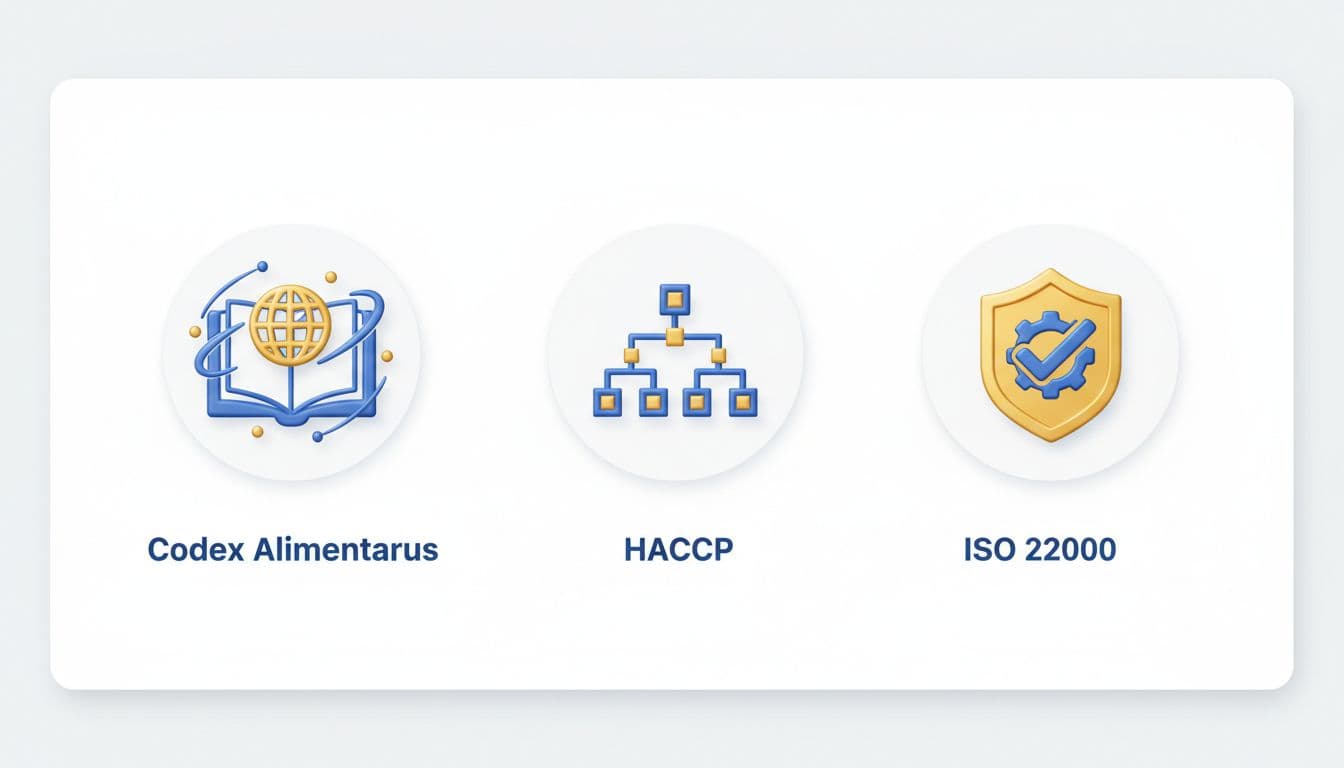
Codex Alimentarius sets the global benchmark for food safety. Training helps teams apply these texts in national systems. This is vital for countries navigating trade and SPS measures. Furthermore, it prepares teams for international negotiations and trade reviews.
HACCP Training in Africa
HACCP identifies and controls hazards systematically. Our HACCP training in Africa emphasizes real-world application for SMEs. It reduces risks before they become dangerous. This makes it one of the most valuable skills a food business can develop.
ISO 22000 Training in Africa
ISO 22000 provides a full food safety management framework across the supply chain. Our ISO 22000 training in Africa helps businesses build compliant systems. This leads to certification and higher buyer confidence. As a result, businesses gain stronger market access.
National Food Control Systems
Courses cover how to structure and run food safety governance. Key topics include inspection planning and lab capacity. They also cover risk communication strategies and crisis response planning.
GMP and GHP for Food Businesses
Good practices form the foundation of safe food production. Training builds daily routines that lower risk across the supply chain. Furthermore, strong GMP and GHP basics prepare businesses for HACCP and ISO 22000 implementation.
Common Mistakes to Avoid in Food Safety Capacity Building in Africa
One-off workshops with no follow-up rarely work. Instead, build in coaching and on-the-job support. Avoid generic content that ignores local realities. Always adapt materials to the African context. Do not focus only on individuals. Address organizational and system-level needs as well. Never measure success by attendance alone. Track real outcomes and behavior changes. Finally, do not ignore the informal sector. Most people buy food there, so include them in your planning. Our food safety training in Africa program is designed to avoid every one of these pitfalls.
What Good Food Safety Training in Africa Looks Like
The best programs are practical and actionable. Participants leave with tools they can use today. These programs reflect real African food system conditions. They use participatory methods instead of just lecturing. Clear links to national goals strengthen their relevance. Lastly, structured support follows the initial training. Dive deeper with the food safety training in Africa resource.
The Role of Tailored Food Safety Courses in Africa
Tailored courses beat off-the-shelf programs every time. They address the exact gaps that matter most. Content remains relevant to the specific participants. Programs fit the available time and budget. They connect directly to organizational priorities. Tailored content and approach are explained in the food safety training in Africa page.
For instance, West African regulators need specific Codex content. This looks different from export-focused training in East Africa. Both groups need food safety training in Africa, but the emphasis shifts.
Conclusion
Food safety in Africa does not improve through rules alone. It requires people who understand the systems. Training is a direct investment in stronger food safety systems. When well designed, it delivers results for everyone. The need for practical food safety capacity building in Africa is clear. The opportunity is real for those who act. For practical rollout support, see Food Safety Training in Africa services.