
Codex Alimentarius: The Simple Guide to Global Food Standards
Codex Alimentarius sets global food standards and gives countries a shared reference point. As a result, many stakeholders use it to support food safety and fair trade.
In this guide, readers will learn what Codex does and who leads the work. In addition, the article shows practical ways to use Codex texts in real life. If your team needs support applying these standards in practice, explore my food safety training in Africa page.
What is Codex Alimentarius?
Codex Alimentarius is an international collection of food standards and related guidance. To support this work, FAO and WHO coordinate the Codex program. Through meetings and committees, member countries develop and review the texts.
This system helps protect consumer health. At the same time, it supports fair practices in the food trade. Because of these goals, Codex often influences national food laws.
However, many readers ask a basic question. What does Codex actually publish, and how can people use it? The sections below answer that step by step. For institutions and teams that need practical support, I also offer food safety training in Africa focused on Codex, compliance, and food control systems.
Why Codex Alimentarius matters for food safety and trade
Codex affects everyday food decisions in governments, labs, farms, and factories. Because it sets clear expectations, the standards reduce confusion and speed up action.
Codex Alimentarius benefits for consumers
Safer food protects health. In addition, clear labeling helps people make informed choices. Strong hygiene guidance can also reduce illness risks.
Codex Alimentarius benefits for governments
A shared reference makes rulemaking easier. For example, common approaches support inspectors and risk managers. As a result, countries can compare systems using the same baseline. Countries that want to strengthen application of these standards can also benefit from food safety training in Africa for regulators, institutions, and technical teams.
Codex Alimentarius benefits for businesses
Exporters face many rule sets. Therefore, Codex can reduce surprises across markets. Procurement teams also use Codex to set supplier expectations.
Codex Alimentarius and public trust in food safety
Food debates can get emotional fast. However, Codex offers a shared starting point for facts. Evidence-based standards also help reduce rumors.
Codex Alimentarius Commission: who runs Codex?
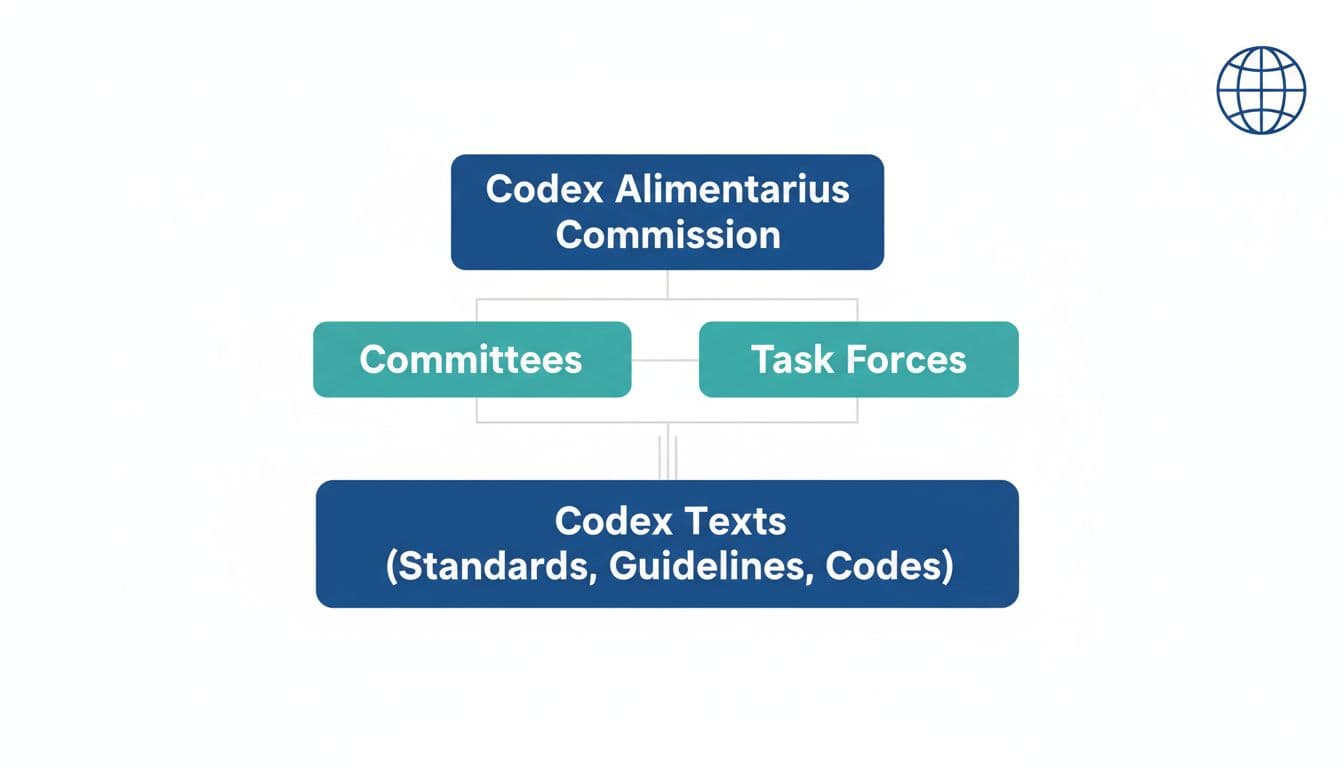
The Codex Alimentarius Commission leads the Codex system. In addition, FAO and WHO support the Commission’s work. Through sessions and committee meetings, member countries send delegates to develop and review texts. Readers who want practical guidance can also review the Codex Foundations, Engagement Training page or explore my broader food safety training in Africa services.
Codex also relies on subsidiary bodies, including committees and task forces. For example, some groups focus on food hygiene, while others focus on food labeling.
To keep the work consistent, Codex follows written procedures. The Codex site highlights the Procedural Manual as the guidebook for these rules.
What Codex publishes: Codex standards, Codex guidelines, and codes of practice
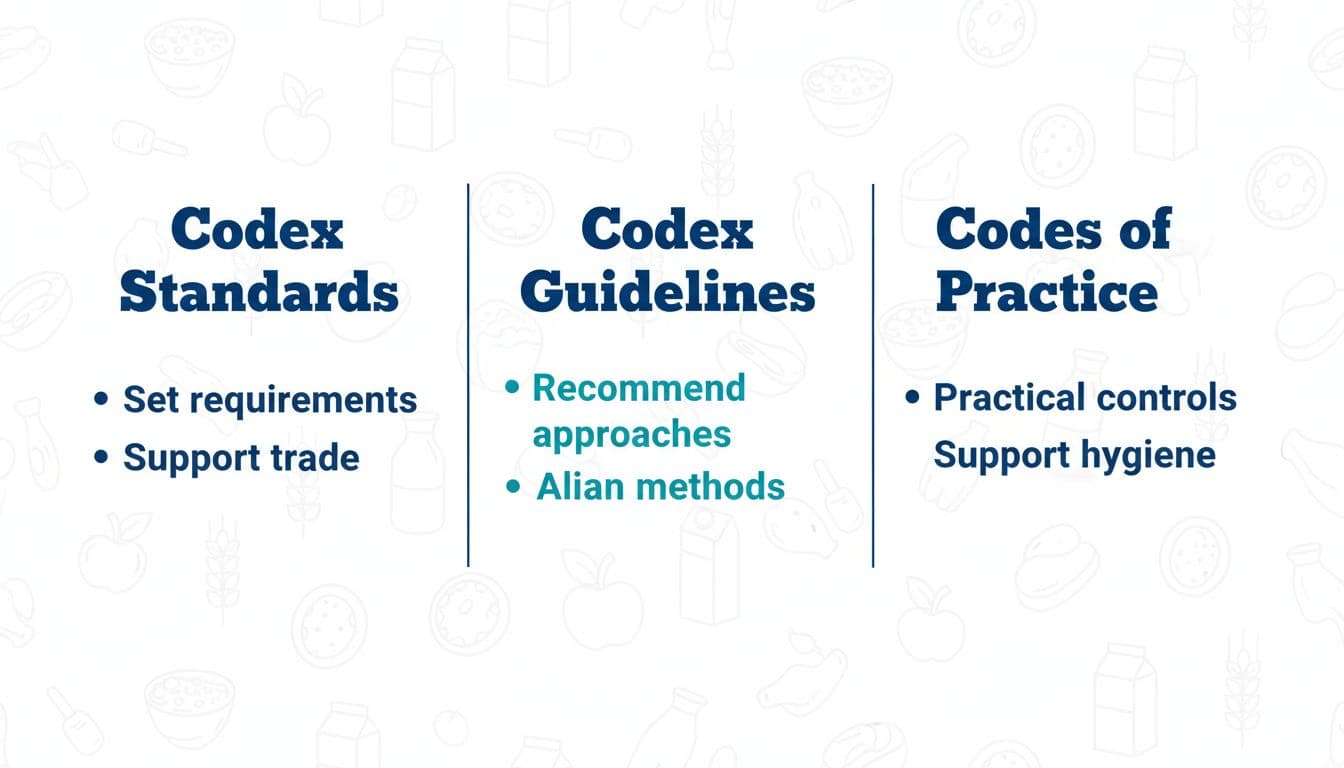
Codex publishes several types of texts. Each type serves a different purpose. To start, readers should identify what they are reading.
Codex standards
The Codex standards set agreed requirements for foods. For example, some standards define product identity and composition. Other texts set labeling provisions for a product class.
These standards often support trade. In addition, they help regulators write consistent rules. Many companies also use them to build specs and test plans.
Codex guidelines
The Codex guidelines recommend how to approach a topic. In many cases, they explain principles and best practices. As a result, teams use them to align methods across countries.
Some guidelines address labeling concepts. Others focus on risk analysis principles. Therefore, these documents help decision-makers choose a consistent path.
Codes of practice
The Codes of practice give practical control steps. Many codes focus on hygiene and hazard control. For that reason, plants use them to strengthen food safety programs.
A code often reads like a playbook. Instead of listing only requirements, it suggests controls to consider. It also explains how to manage common risks.
Other Codex texts (definitions and principles)
Codex also publishes definitions and principles. In addition, Codex committees may issue discussion papers. These documents explain why a text exists and how it should work.
International food standards: where Codex fits
Many organizations publish standards. Some standards come from governments. Others come from private schemes and buyer programs.
Codex sits in a unique place. It comes from a global intergovernmental process. FAO and WHO support the science and coordination.
That structure gives Codex broad legitimacy. It also makes the process slower than private standards. Still, the extra review often improves clarity.
How Codex standards are developed (step-by-step)
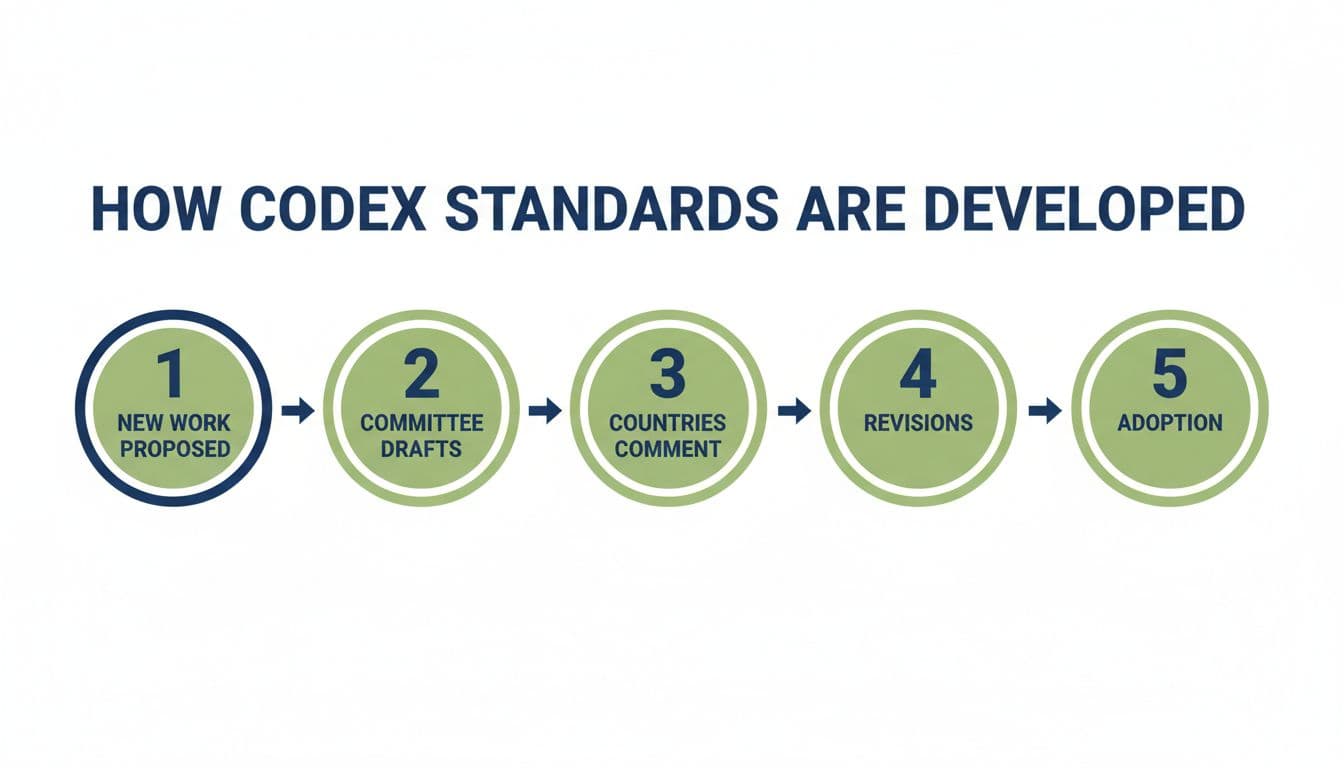
Many people search for how Codex standards are developed. Codex uses a structured drafting and review process. Member countries review drafts and send comments.
Codex usually follows this flow:
- A need becomes clear. Countries or committees propose new work.
- The Codex committee drafts a text. Experts and delegates review evidence.
- Members submit comments in writing. The committee revises the text.
- The Commission considers adoption. Members aim for consensus when possible.
The Codex Procedural Manual describes the detailed steps and rules.
Codex uses committees to do the work
Committees do most drafting. Some committees focus on general topics. Other committees focus on food commodities.
General subject committees can cover:
- food hygiene
- food labeling
- food additives
- contaminants
- methods of analysis and sampling
Commodity committees can cover specific food categories. Those topics can include dairy, fats, or fruits and vegetables. Committee activity changes over time.
Codex prefers consensus
The system aims to build agreement across members. Consensus improves acceptance and later use. When consensus fails, formal decision rules guide decisions.
Codex relies on science and risk analysis
Risk analysis concepts guide many areas of the work. These concepts include hazard identification and exposure considerations. Scientific advice also supports many decisions. Explore the science behind decisions in my Codex Science and Risk Analysis Training.
You do not need to be a scientist to read Codex. You just need a clear method for reading each document type. The next section shows that method.
How to read Codex texts without getting lost
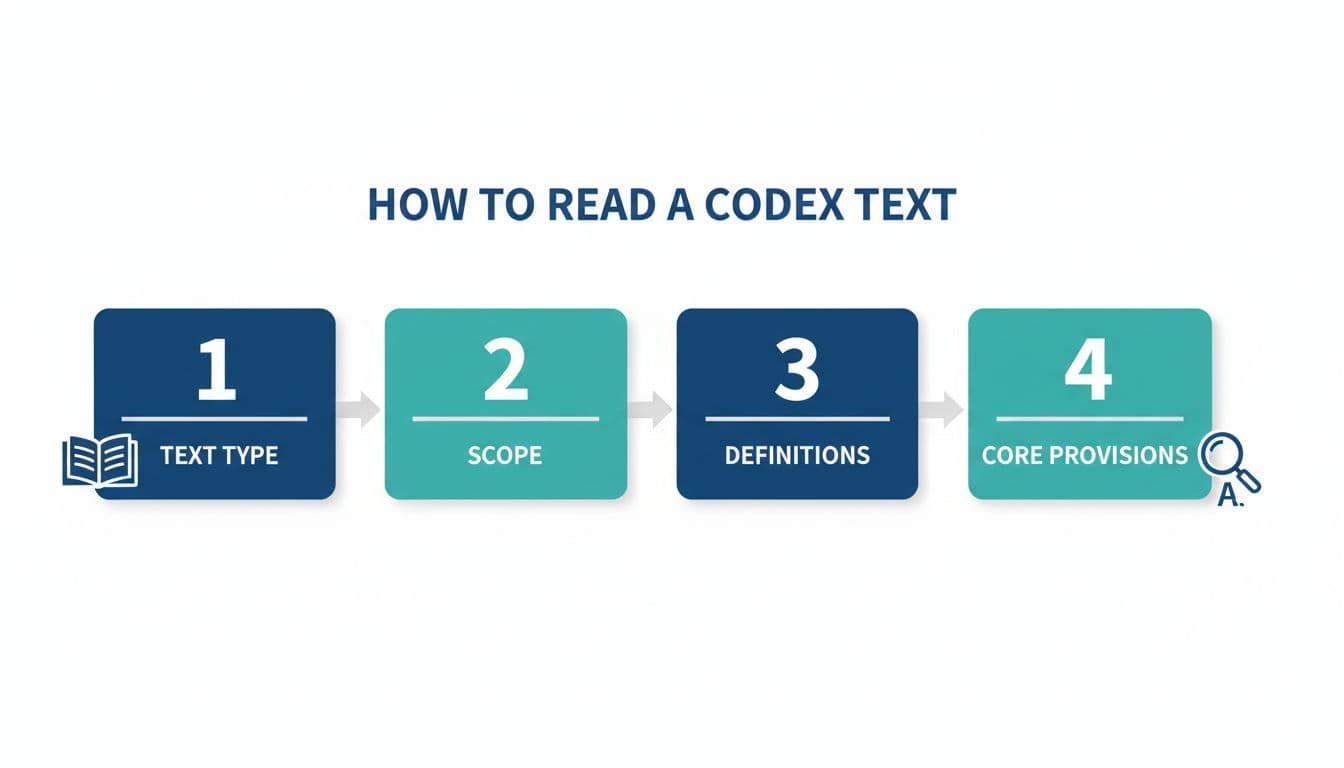
Codex documents can feel dense. A simple reading order fixes that. Use the same checklist every time.
Step 1: Codex text type (standard, guideline, code)
Start by checking the title. Look for words like “Standard” or “Guidelines.” Codes of practice also identify themselves.
This step sets your expectations. A standard often contains requirements. A guideline often contains recommended approaches.
Step 2: Codex scope and intended use
Scope tells you what the document covers. Scope also tells you what the document does not cover. You should read scope before anything else.
Step 3: Codex definitions and key terms
Codex often defines key terms. Definitions prevent misunderstandings. They also help you align internal documents.
Step 4: Codex provisions and requirements
Standards often contain provisions on identity and composition. Some texts include labeling provisions. Many texts include hygiene-related expectations.
Copy these provisions into a working checklist. Then compare them to your current practice.
Step 5: Related Codex texts and cross-references
Codex texts often connect to other Codex texts. A hygiene code may link to a general hygiene framework. A commodity standard may align with a labeling guidance text.
This step helps you avoid cherry-picking. It also helps you understand the full intent.
How to use Codex Alimentarius in everyday life
Codex can help even outside government. People use it in business planning, education, and consumer advocacy. Practical use matters more than theory.
Using Codex food standards to benchmark products
Start with your product category. Next, find the relevant Codex standards and guidance. Then compare them to your product spec.
This method helps in product design. It also helps during reformulation. Clear benchmarks reduce rework later.
Example: A team launches a canned product for export. The team reviews a relevant product standard and labeling guidance. The team updates fill weight controls and label wording early.
Using Codex guidelines to reduce labeling mistakes
Labels cause costly delays. Claims also trigger disputes. Codex guidelines can help you set internal rules.
Create a simple internal checklist:
- product name rules
- ingredient list rules
- allergen statements and clarity
- nutrition labeling approach, when relevant
Then train marketing and legal teams together. Cross-team alignment reduces last-minute changes.
Using Codex texts in supplier specifications
Suppliers operate across different systems. Clear specs reduce arguments. Codex references can provide neutral language.
You can add a “Codex alignment” section in specs. That section can list key limits or practices. Purchasing teams can also request evidence during onboarding.
Using Codex Alimentarius in training and education
Teachers and trainers need clear sources. Codex offers stable terminology. Standard definitions also support consistent learning.
You can also use Codex in internal training. Supervisors can turn code sections into short work instructions. Short instructions work better on the floor.
Using Codex in public health communication
Advocates can use Codex to ground debates. Reporters can cite it as a reference point. Community groups can also use it to ask better questions.
Organizations that want hands-on capacity development can request food safety training focused on Codex and practical implementation. Details are available here: https://blaiseouattara.com/food-safety-training-africa/
Codex Alimentarius and national laws: how they connect
Codex does not automatically create law. Countries decide how to use Codex in their own systems. That decision can range from direct adoption to partial reference.
Codex still matters in practice. Regulators often compare national limits to Codex. Courts and dispute processes may also consider international reference points.
You should treat Codex as a baseline. Local law still controls day-to-day compliance. Local guidance can also add extra requirements.
Common misconceptions about Codex Alimentarius
Misunderstandings spread fast online. Clear answers help readers trust your post. Use this section to correct myths.
Misconception: Codex Alimentarius is a single book
Codex includes many texts. New texts appear over time. Committees also revise older texts.
Misconception: Codex sets rules for every food
Codex does not cover every product in detail. Instead, the work focuses on key topics and high-impact categories. Many products rely on general subject guidance instead.
Misconception: Codex only helps exporters
Local businesses benefit too. Codex offers proven definitions and approaches. Better clarity can improve local food safety.
Misconception: Codex ignores local culture
Codex tries to support global alignment. Countries still keep local rules and preferences. Codex aims for broad agreement, not perfect local fit.
Codex Procedural Manual: why it matters
Codex system needs clear rules. The Codex Procedural Manual provides those rules. It helps countries and observers participate effectively.
The manual covers:
- rules of procedure
- procedures for elaborating Codex standards and related texts
- definitions and guidelines for Codex committee operations
For readers, this matters for one reason. It shows that Codex uses a structured process, not ad hoc decisions.
How to follow Codex updates and committee work
Codex content changes. New work also starts each year. You can follow updates with a simple system.
1) Codex topic list for monitoring changes
Write down your core risks and categories. Examples include labeling, hygiene, additives, and contaminants. Keep the list short.
2) Codex committees to follow by subject
Match each topic to a committee. Then track those committees only. Focus beats volume.
3) Quarterly Codex review routine
Put a reminder on your calendar. Review updates and new drafts. Then decide what impacts your work.
4) Turning Codex updates into internal actions
Convert updates into checklists and tasks. Update specs, labels, or SOPs. Train teams when needed.
This system fits general readers too. Students can use it for research. Consumers can use it to understand the process.
Practical checklist: use Codex Alimentarius like a pro
This section works well for a cornerstone post. Readers can save it and share it. The checklist also supports featured snippets.
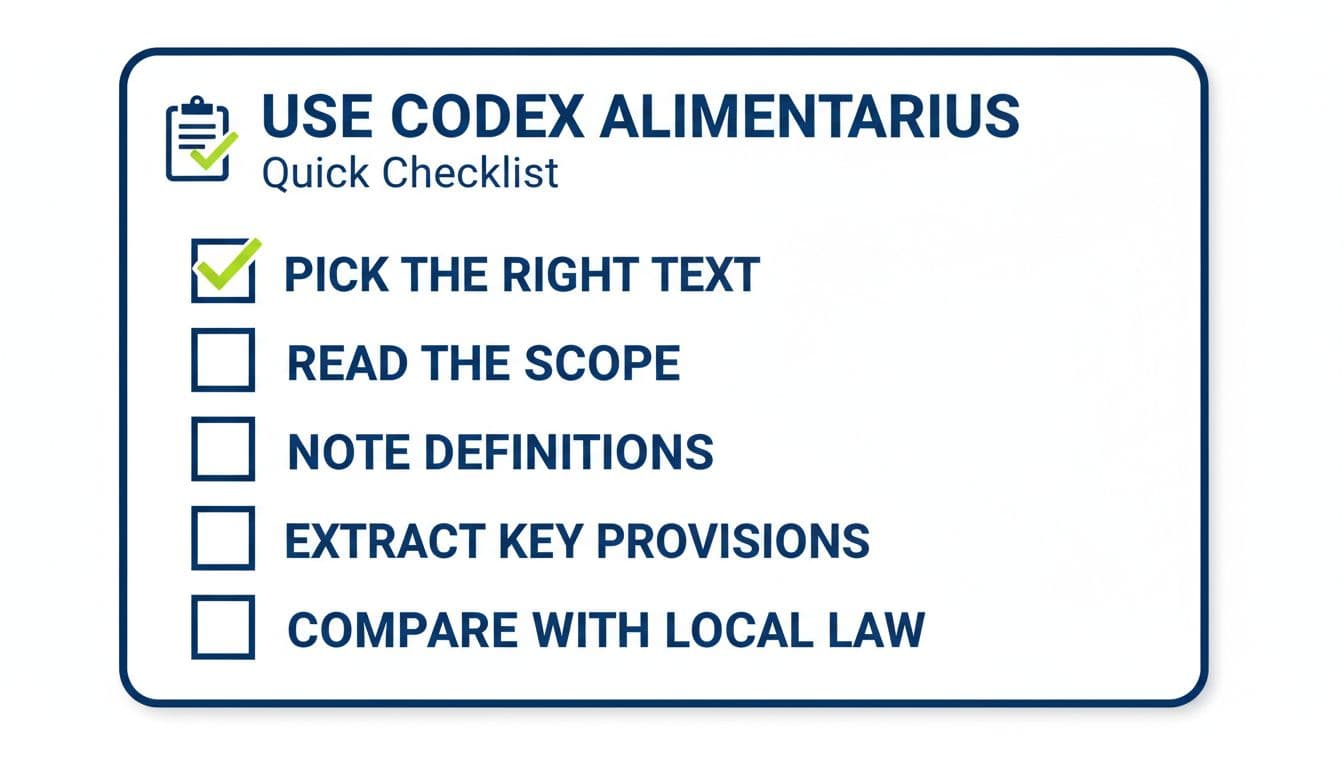
Codex Alimentarius quick-use checklist
- Define your goal (compliance, export, training, or research).
- Find the right Codex text type (standard, guideline, or code).
- Read the scope first. Confirm the product and topic match.
- Copy key definitions into your notes. Use the same terms internally.
- Extract core provisions into a checklist. Make it measurable.
- Check related texts and references. Confirm you did not miss context.
- Compare Codex to local law and buyer rules. Resolve conflicts early.
- Document your decisions and evidence. Keep it simple and clear.
- Train teams using short steps. Test understanding with examples.
- Review updates quarterly. Adjust specs and labels as needed.
FAQ: Codex Alimentarius
What is Codex Alimentarius?
Codex Alimentarius is an international collection of food standards and guidance. FAO and WHO support it. Countries create the texts through Codex bodies.
What does “Codex” mean?
People often use “Codex” as a short name. It refers to the Codex Alimentarius system and its texts. The term also refers to the Commission that leads the work.
Are Codex standards mandatory?
Codex standards do not automatically create law. Countries decide how to use them. Local regulations still control compliance.
Who leads the Codex Alimentarius Commission?
The Commission includes member countries and officers. Codex also uses committees and an executive structure. The Codex Procedural Manual explains roles and procedures.
What are Codex food standards used for?
Governments use Codex food standards as reference points. Businesses use them for product specs and labeling checks. Educators use them for training and research.
How can small businesses use Codex Alimentarius?
Codex can reduce guesswork. Clear definitions can improve labeling decisions. Hygiene codes can also strengthen food safety routines.
How often does Codex update texts?
Codex revises texts as needs change. Committees propose updates and new work. You can track topics that match your products.
Where to start on the official Codex Alimentarius site
Start at the Codex portal. Next, identify your topic and committee. Then follow the relevant texts and updates.
Key takeaways on Codex Alimentarius
Codex Alimentarius provides international food standards and related guidance. With support from FAO and WHO, the Codex Alimentarius Commission leads this work. Different texts serve different purposes, including Codex standards, Codex guidelines, and codes of practice. Clear reading steps help readers use Codex texts with confidence. Over time, a simple tracking system also helps people follow updates.
Understanding Codex is a good first step. Applying it well is what makes the difference. If your team needs tailored support, explore my food safety training in Africa services.
References
- FAO/WHO Codex Alimentarius portal: https://www.fao.org/fao-who-codexalimentarius/en/