
Capacity development in Africa is essential for building safer food systems that protect public health and support economic growth. In many African cities and rural areas, people buy most of their food from small shops, open markets, and street vendors. These places feed millions every day and provide jobs for many families.
Yet they are often seen as “high risk” for food safety. Studies from the World Bank show that unsafe food carries a heavy economic and health burden in low- and middle-income countries, including many in Africa, and that smarter food safety investments can improve both public health and trade.
Too often, food safety efforts focus only on control and punishment. Inspectors close stalls. New rules arrive on paper. Donors fund short training courses. Then, little changes in daily practice.
To make real and lasting progress, Africa needs something deeper. It needs capacity development in Africa that fits the way food is really produced, traded, and consumed across the continent.
In this article, I use ideas from the FAO capacity development approach and apply them to the African food safety context. The focus is on SMEs and the informal sector, and on how capacity development can help governments, regulators, and partners build stronger, more realistic systems. If you are looking for practical support, explore my food safety training in Africa page.
Why food safety in Africa cannot copy-paste “formal” models
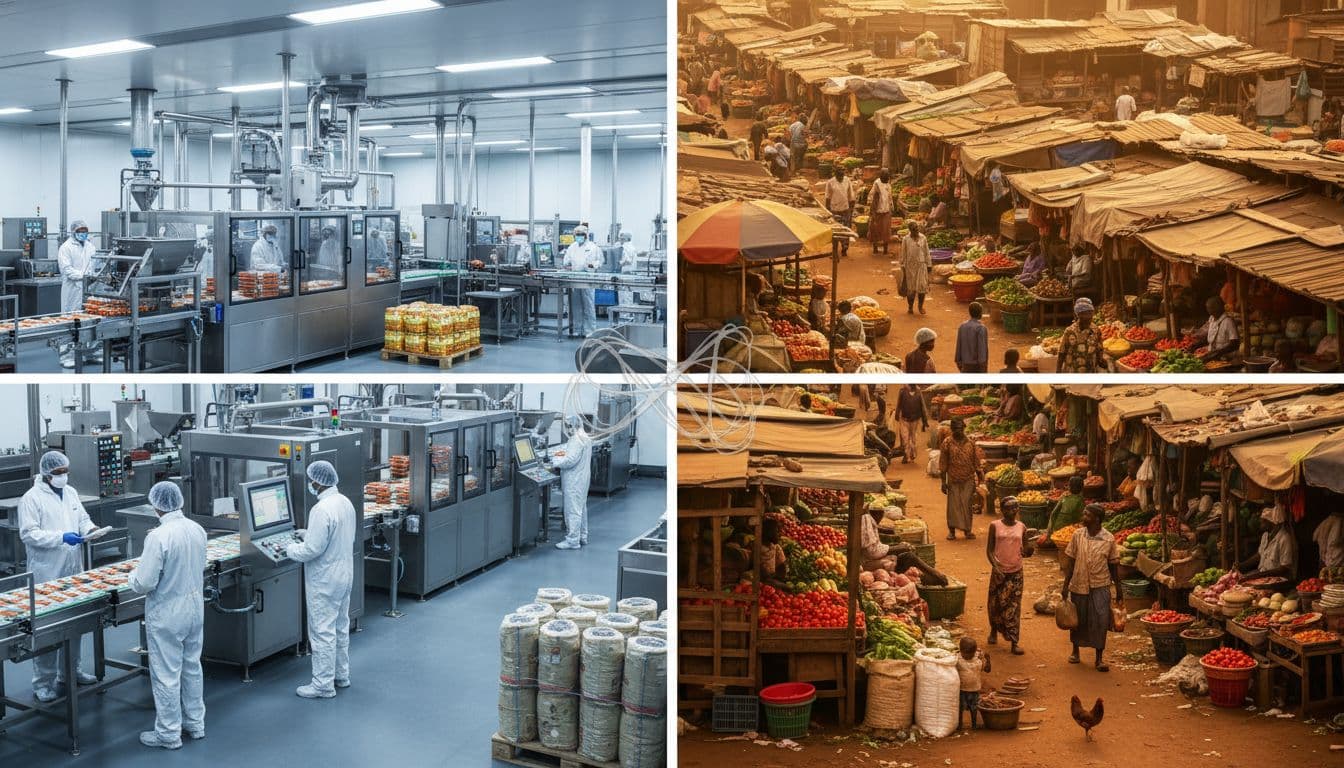
In many high-income countries, most food passes through large, formal companies and tightly controlled value chains. Rules, inspections, and private standards can work well in that context.
Africa is different in several key ways, which must be considered in any effort on capacity development in Africa related to food safety. Regional bodies, such as the African Union, have also recognized the need to strengthen sanitary and phytosanitary (SPS) systems to support safe trade and protect consumers.
1. SMEs and informal markets handle a large share of food
Across Africa:
- Many processors are micro and small enterprises
- Most food is sold in open markets, kiosks, and on the street
- Cold chain is often weak or missing
- Many transactions are cash based and informal
This is not a small side issue. It is the main channel through which people access food.
2. People depend on the informal sector for both food and income
Informal markets are not just “risky.” They are also:
- A major source of jobs, especially for women and youth
- A safety net for low-income households
- A source of affordable food for urban and rural consumers
Any food safety policy that treats the informal sector only as a problem can cause harm. Closing markets or imposing strict rules with no support can push people into deeper poverty or shift trade to less visible channels.
3. Traditional control alone is not enough
Many countries have:
- Food laws and regulations in place
- Inspection services with limited staff and resources
- Some laboratories, often underused or underfunded
- Isolated awareness campaigns
Yet outbreaks and unsafe practices continue.
The gap is not only about “more rules” or “more inspectors.” It is about capacity development in Africa at every level of the system.
This is where the FAO capacity development thinking is helpful. It reminds us that lasting food safety improvements need changes in people, organizations, and the wider environment.
From control to capacity: a better way to think about food safety
FAO’s view of capacity development is useful for food safety because it looks at three linked levels:
- Individuals
- Organizations
- The enabling environment
When we apply this to capacity development in Africa, especially in food safety, it becomes clear that change must happen across all three. At the individual and organizational levels, food safety training in Africa can help teams build the practical skills needed for stronger systems. FAO also provides an overview of its work on food safety, which highlights the link between safer food, trade, and public health.
Capacity Development in Africa at the Individual Level
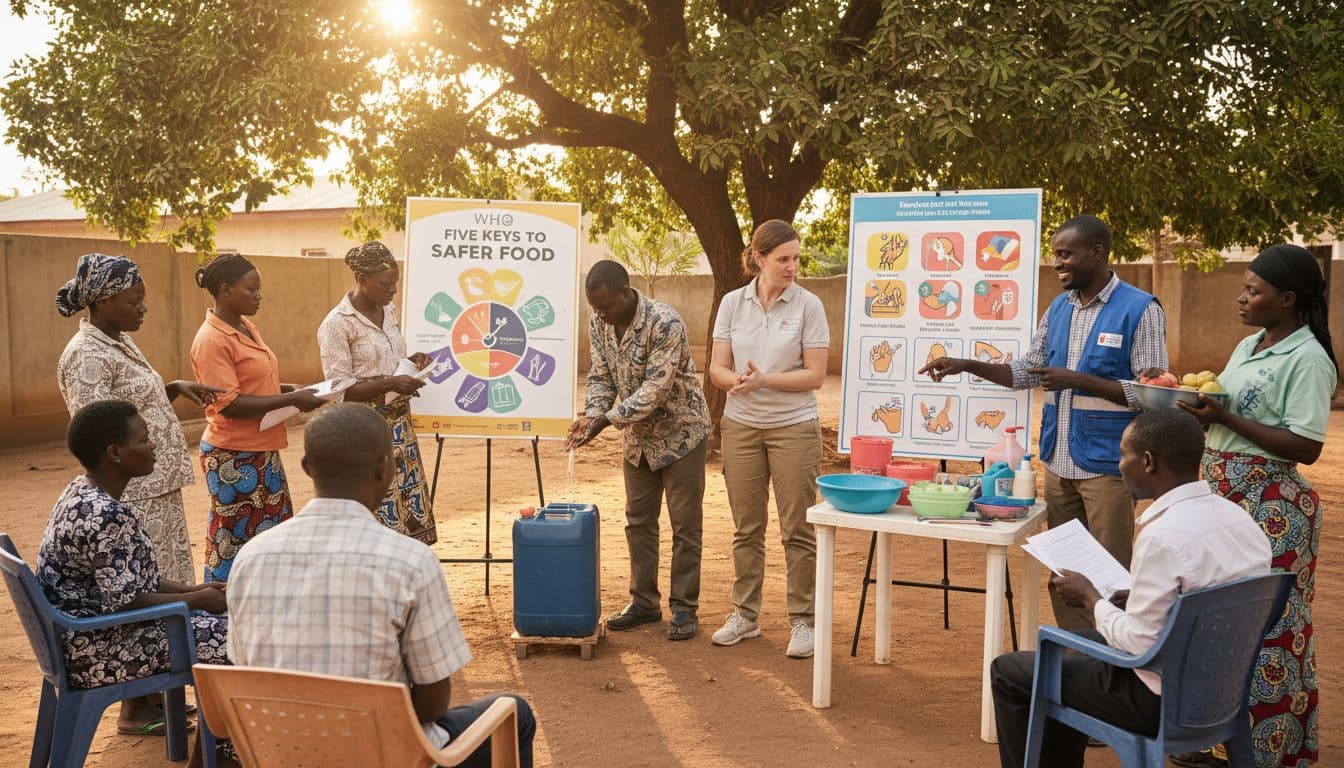
At the individual level, we usually think of:
- Food handlers in markets and small businesses
- Managers of SMEs in processing, storage, or transport
- Inspectors, lab technicians, and extension workers
- Policy makers and program managers
Many food safety projects focus on training. Workshops, posters, manuals, and sometimes online courses are used. These efforts are helpful, but they often do not lead to lasting behavior change. Start with a baseline. Use a food safety training needs assessment (TNA) to identify priority skills, role gaps, and the real root causes.
To make capacity development in Africa more effective at the individual level, we need to:
- Start from what people already know and do.
Street vendors, small processors, and traders often have strong practical knowledge. Training should respect this and build on it. - Use simple, practical messages and tools.
Instead of long lists of rules, focus on a few key behaviors, similar to WHO’s Five Keys to Safer Food: handwashing, safe water use, temperature control, clean surfaces, and separation of raw and cooked foods. - Support behavior change over time.
Short training sessions should be followed by regular visits, coaching, or peer learning. Market associations, cooperatives, and local leaders can help reinforce new practices. - Include inspectors and advisors in the learning process.
Inspectors need skills to educate and guide, not only to sanction. This shift in mindset is critical in informal settings.
In my consulting work, I help governments and partners design training and coaching systems that are realistic, context specific, and aligned with broader capacity development in Africa goals.
You can see how I structure these services on my page on
Food Safety Consulting Services
Capacity Development in Africa at the Organizational Level

At the organizational level, we look at:
- Food safety authorities and inspection services
- National laboratories and reference institutes
- Local governments and market management committees
- SMEs, cooperatives, and producer organizations
Many of these organizations face similar challenges:
- Unclear roles and overlapping mandates
- Limited budgets and staff
- Weak systems for planning, monitoring, and learning
- Gaps in infrastructure, equipment, and maintenance
For SMEs and informal groups, the challenges are often very basic:
- No written procedures or records
- No simple tools to manage hygiene and traceability
- Limited access to finance to improve equipment or premises
- Lack of support to understand and apply food safety requirements
Capacity development in Africa at the organizational level must respond to these real conditions.
Some practical steps include:
- Clarify roles and coordination.
Define who does what between ministries, agencies, and local authorities. Create simple coordination mechanisms to avoid duplication and gaps. - Build simple management systems for SMEs.
Support SMEs to adopt basic food safety management practices that fit their size. This does not always mean full ISO or complex HACCP systems. It can mean clear cleaning routines, basic documentation, and simple checks. - Support market committees and associations.
These groups can manage shared infrastructure (water points, waste collection, cold rooms), set basic hygiene rules, and support compliance among their members. - Invest in laboratory capacity that responds to real needs.
Labs should offer tests that are actually used for decision making, monitoring, and trade, not just for isolated studies.
A strong system needs safe facilities, clear workflows, and daily hygiene controls. This guide shows what that looks like in practice: setting up a small-scale abattoir in Africa.
When I work with clients, I often combine organizational assessments with practical roadmaps. The focus is on what is realistic for their context, while still aligned with international principles, such as the Codex Alimentarius food safety standards, and with broader capacity development in Africa goals.
If you are exploring such support, you can learn more here:
Food Safety Consulting Service
Capacity Development in Africa and the Enabling Environment
The “enabling environment” is the wider system of:
- Laws and regulations
- Policies and strategies
- Economic incentives and market pressures
- Social norms and power dynamics

In many African countries, food safety laws exist but may be:
- Outdated or not adapted to current value chains
- Very strict on paper but weakly enforced in practice
- Focused on large formal enterprises, with little guidance for SMEs and informal actors
For capacity development in Africa to lead to real progress, the enabling environment must:
- Protect consumers
- Support SMEs and informal actors to improve
- Recognize different levels of risk and capacity
- Encourage gradual, realistic compliance
Practical actions include:
Review and update regulations.
Laws and regulations can include tailored provisions for micro and small businesses, with clear, stepwise improvement paths.Develop risk-based inspection systems.
Inspectors focus first on the highest risks and the most impactful controls, instead of treating all operators in the same way.Create positive incentives.
For example, public recognition for markets that meet hygiene standards, or preference in public procurement for SMEs that adopt good practices.Align donor programs with national strategies.
Donors and investors can support national plans, rather than running isolated pilots. This strengthens long term capacity development in Africa.
Inspiration from the FAO approach helps here. It reminds us that training alone will not work without supportive policies, institutions, and incentives.
Why SMEs and the Informal Sector Must Be at the Center

If most food passes through SMEs and informal markets, then they must be central to any strategy for capacity development in Africa in food safety.
Putting them at the center leads to key shifts:
From exclusion to inclusion
Authorities work with informal vendors and small processors. They involve them in policy discussions, pilot projects, and the design of practical guidelines.From “compliance first” to “improvement first”
The first question is not “Are you fully compliant with this long list of rules?”
The first question is “What is the highest risk here, and what is the next step we can take together to reduce it?”From fear of inspectors to trust based collaboration
Inspectors act as advisors and partners in improvement. Over time, this builds trust, which makes rules more acceptable and enforcement more effective.From short projects to long term systems
Governments, donors, and technical partners build systems that can function with domestic resources and local skills, not only through external funding.
These shifts are at the heart of sustainable capacity development in Africa for food safety.
How I Support Capacity Development in Africa for Food Safety
As an international food safety consultant with long experience in the African context, I work with governments, development partners, and investors who want to build stronger food safety systems rooted in realistic capacity development.
My support typically includes:
Food safety capacity assessments
I assess capacities at individual, organizational, and system levels, often inspired by the FAO capacity development logic, but tailored to each country and value chain.Design of national or sector specific food safety strategies
I help develop strategies that include SMEs and informal actors, and that combine regulatory, technical, and capacity building measures.Practical support to implement change
This can include training programs, coaching systems, development of guidelines for small operators, and design of monitoring and evaluation frameworks.
All this work is grounded in a clear understanding of capacity development in Africa, and in the need to link food safety goals with economic and social realities.
If you are involved in policy, program design, or investment in food value chains, and you want your work to have sustainable impact, you can read more about my services here:
Food Safety Consulting Service
Conclusion: Capacity Development in Africa for Safer, Fairer Food
Africa can improve food safety without harming the livelihoods of the people who produce, process, and sell most of its food. The path lies in smart and inclusive capacity development in Africa, not only in stricter control.
By working at the levels of individuals, organizations, and the enabling environment, and by giving real attention to SMEs and the informal sector, governments and partners can build food systems that are safer, fairer, and more trusted.
If you are planning or running initiatives in this area and would like expert support to design or strengthen your approach, I would be glad to help.
Capacity development in Africa becomes more effective when ideas are translated into practical action. If your institution or team needs tailored support, learn more about my food safety training in Africa services.