
Codex standards vs guidelines vs codes of practice confuse many QA and regulatory teams. Codex Alimentarius is a joint FAO and WHO program, and you can find the official portal here: Codex Alimentarius (FAO/WHO).
This post makes the differences clear and practical. You will also learn how to pick the right Codex text fast.
New to Codex overall? Start here first then browse all Codex articles here.
Why “Codex standards vs guidelines vs codes of practice” matters in real work
Teams lose time when they use the wrong Codex text. Specs get vague when people rely on guidance only. Audits get messy when checklists mix requirements and recommendations.
Regulators also need clean definitions. Policy teams must separate “requirements” from “good practice.” Clear classification improves comments on draft texts too.
Codex gives you three main tools:
- Standards to define product requirements.
- Guidelines to align approaches and methods.
- Codes of practice to prevent hazards in operations.
You can use all three. You just need the right order. Codex follows formal rules for developing and adopting texts, described in the Codex Procedural Manual.
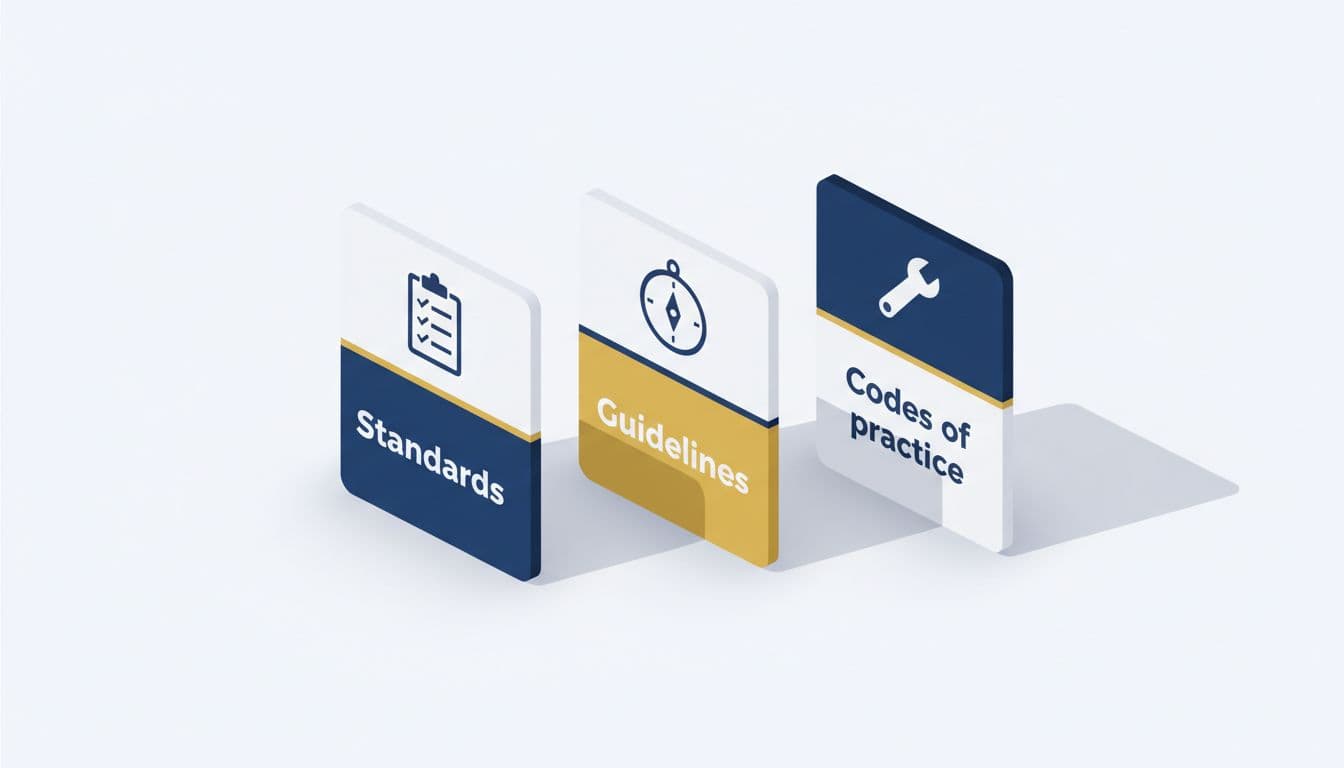
Quick definitions (plain language)
Codex standards (requirements)
Codex standards set agreed requirements for foods. They often cover identity, composition, labeling, and quality factors. Many standards connect to trade expectations.
Codex guidelines (recommended approaches)
Codex guidelines recommend principles and methods. They help teams apply consistent decision-making. They often support risk-based choices.
Codex codes of practice (practical controls)
Codex codes of practice give operational control measures. They focus on hygiene, handling, processing, and prevention. Plants often turn them into SOPs and PRPs.
Codex standards vs guidelines vs codes of practice: a one-page cheat sheet
Use this table as your quick reference.
Text type | What it answers | What you get | Best users | Best outputs |
|---|---|---|---|---|
Codex standard | “What must the product meet?” | Product requirements you can verify | QA, regulatory, trade | Specs, label checks, acceptance criteria |
Codex guideline | “How should we approach this?” | Principles and recommended methods | QA, regulators, labs | Policies, methods, training, risk decisions |
Codex code of practice | “How do we prevent hazards?” | Practical control steps | QA, operations, inspectors | SOPs, PRPs, audit checklists, controls |
Codex standards vs guidelines vs codes of practice in one decision flow
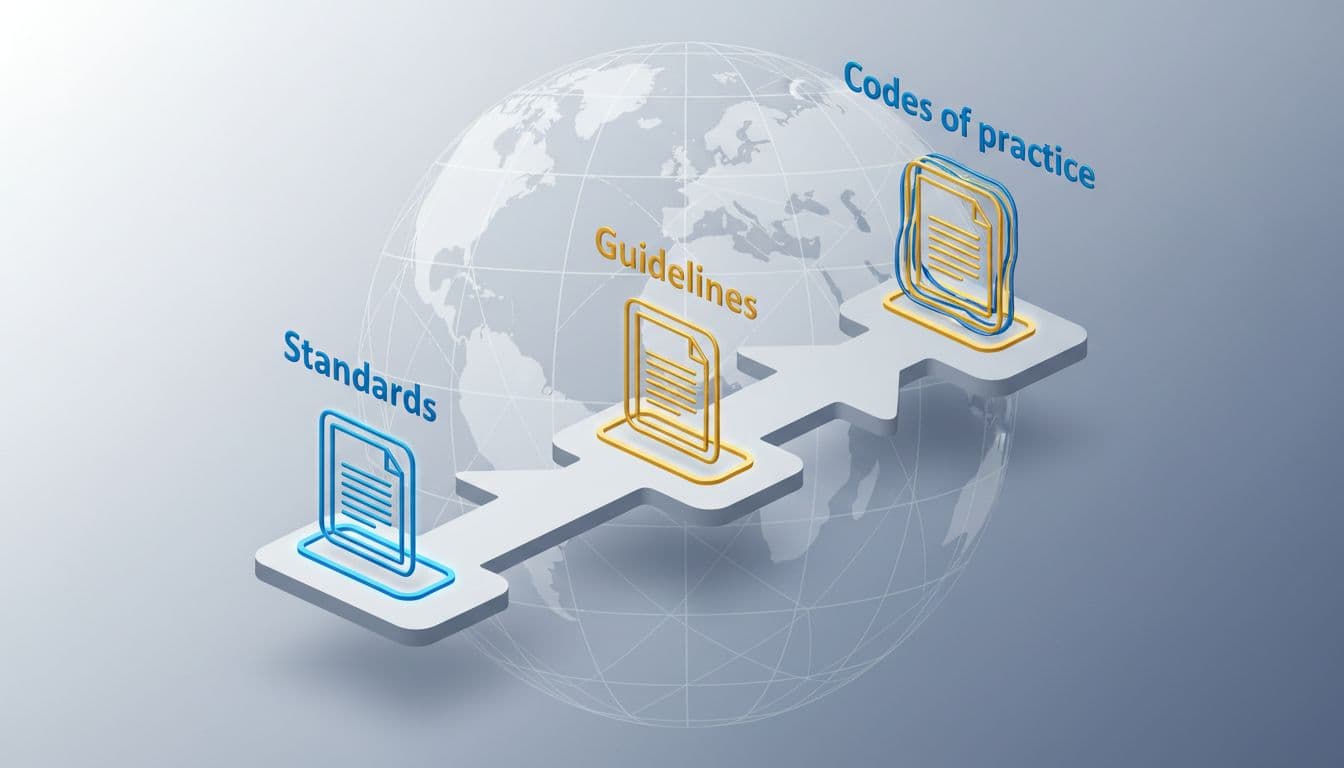
Use this simple flow before you open any document.
- You need a measurable requirement. Start with a Codex standard.
- You need a consistent approach. Start with a Codex guideline.
- You need control steps for operations. Start with a Codex code of practice.
Next, you confirm three things:
- The text scope matches your product or issue.
- You use the latest version.
- National law and buyer rules also align.
Codex standards vs guidelines vs codes of practice, part 1 (Codex standards)
What Codex standards do for QA and regulatory teams
Codex standards help you define what a food product must meet. They often support product identity and composition. Many standards also include labeling provisions.
QA teams use standards to build:
- product specifications
- release criteria
- labeling checks
- supplier requirements
- change control rules
Regulators use standards to support:
- national standard setting
- import controls
- inspection baselines
- trade discussions
You can verify a standard. You can test it, check it, or inspect it.
Real examples of how teams apply Codex standards
Here are safe, practical examples you can adapt.
Example 1: Product specification build - A QA manager writes a product specification for a packaged food. The manager checks the relevant Codex standard first. The team then maps each requirement to a spec line. They add test methods and frequencies.
Example 2: Label review - A regulatory specialist reviews a label for export. The specialist reads Codex labeling provisions in the standard. The specialist then compares them with target market rules. The team documents differences and actions.
Example 3: Supplier acceptance - A buyer wants proof of compliance for a key ingredient. QA uses the Codex standard to set minimum composition needs. QA adds those needs to supplier contracts. The team requests COAs and audit evidence.
How to read a Codex standard without missing key clauses
Use this reading order.
- Scope: Confirm the product and intended use.
- Description: Confirm identity and product definition.
- Essential composition: Extract measurable requirements.
- Food additives and contaminants: Note limits and references.
- Hygiene: Extract baseline hygiene expectations.
- Labelling: Pull mandatory label elements.
- Methods of analysis and sampling: Align labs and verification.
You can turn each clause into a checklist line. You can also turn it into a spec requirement.
Common mistakes with Codex standards (and fixes)
Mistake: Teams treat a Codex standard as a full legal substitute.
Fix: Check national law first. Document where law differs.
Mistake: Teams copy a standard into a spec without verification steps.
Fix: Add test methods, limits, frequency, and responsibilities.
Mistake: Teams ignore scope.
Fix: Confirm the product matches the standard scope. Stop if it does not.
Codex standards vs guidelines vs codes of practice, part 2 (Codex guidelines)
What Codex guidelines do, and why they matter
Codex guidelines align how countries and companies approach a topic. They do not always set numeric limits. They give principles, steps, and decision logic.
Guidelines help you answer questions like:
- Which approach should we use for risk decisions?
- How should we design a consistent method?
- What principles should shape labeling policies?
QA teams use guidelines to align policies across sites. Regulators use guidelines to justify consistent national approaches. Training teams also use them for capacity building.
Real examples of Codex guideline use in QA and regulation
Example 1: Risk-based decisions - A regulator designs a risk-based control plan. The team uses Codex risk analysis guidance. The plan separates risk assessment and risk management tasks. The team documents decision criteria.
Example 2: Corporate policy alignment - A multinational company wants one internal method for a topic. The corporate QA team uses a Codex guideline. The team builds a policy that local sites can follow. Each site then adapts details to local law.
Example 3: Method consistency across labs - A lab network needs consistent interpretation of results. The quality lead uses Codex guidance on methods and sampling logic. The network then updates its lab SOPs and training.
How to tell when a guideline will not solve your problem
A guideline will not always give you a measurable limit. It may not give you an acceptance number. It may not define product identity either.
Use a guideline when you need:
- principles
- a framework
- a recommended approach
Use a standard when you need:
- measurable product requirements
- product identity and composition rules
- labeling provisions for a product class
Common mistakes with Codex guidelines (and fixes)
Mistake 1: Teams write specs directly from guidelines.
Fix: Use guidelines for approach. Use standards for requirements.
Mistake 2: Teams treat guidelines as “optional opinions.”
Fix: Use guidelines as a benchmark for good practice. Document your deviations.
Mistake 3: Teams skip evidence.
Fix: Tie decisions to data and risk logic. Keep records for audits.
Codex standards vs guidelines vs codes of practice, part 3 (Codex codes of practice)
What Codex codes of practice do in operations
Codex codes of practice help prevent food safety problems. They focus on hygiene, handling, processing, and transport. They often describe control options for hazards.
QA teams use codes to strengthen:
- prerequisite programs (PRPs)
- sanitation programs
- allergen controls
- maintenance programs
- training plans
- corrective action systems
Inspectors also use them as a reference. Trainers use them to teach practical steps.
Real examples of Codex codes of practice in action
Example 1: Turning a code into SOPs - A plant updates its sanitation program. The food safety lead reviews the relevant code. The lead lists control expectations by step. The team writes SOPs with monitoring records.
Example 2: Corrective action after an incident - A company detects repeated hygiene failures. QA reviews a code of practice to find missing controls. The team adds new checks and training. Management then tracks results by trend reports.
Example 3: Inspector training - A regulator trains new inspectors on hygiene controls. The trainer uses a Codex code as a shared baseline. The training ties each control to a hazard it prevents.
How to convert a Codex code of practice into a control plan
Use this 6-step method.
- List the hazards the code targets.
- List the recommended control measures.
- Assign each control to an owner.
- Pick monitoring steps and frequencies.
- Define records and evidence.
- Add verification and review steps.
This method keeps your program auditable. It also keeps your documents consistent.
Common mistakes with Codex codes of practice (and fixes)
Mistake 1: Teams copy the code into a binder and stop.
Fix: Translate each point into a control, record, and verification step.
Mistake 2: Teams apply every recommendation without risk thinking.
Fix: Tailor controls to product, process, and consumer risk.
Mistake 3: Teams fail to train operators.
Fix: Build short training modules from the code. Test understanding.
H2: Codex standards vs guidelines vs codes of practice (how to choose fast)
Use-case map for QA professionals
Choose the text type by the work task.
- You write a product spec: Start with a Codex standard.
- You review a label claim: Start with a Codex standard, then check guidelines.
- You build a corporate policy: Start with a Codex guideline.
- You strengthen PRPs and SOPs: Start with a Codex code of practice.
- You handle a deviation: Use a code of practice for controls. Use standards for acceptance needs.
Use-case map for regulators and policy teams
- You draft a national standard: Start with a Codex standard.
- You design inspection guidance: Start with a code of practice.
- You justify a decision framework: Start with a Codex guideline.
- You respond to trade questions: Use standards plus risk principles.
When you need the official source, use the Codex texts portal: Codex Texts (standards, guidelines, codes).
Codex standards vs guidelines vs codes of practice, plus national law and buyer rules
Codex supports consistency. National law creates enforceable requirements. Buyer standards add contract obligations. Codex also matters in trade because it links to the WTO SPS framework: see the WTO SPS Agreement.
QA teams should keep a simple hierarchy:
- National law in the target market
- Buyer and contract requirements
- Codex texts as a global reference
- Company internal standards
Regulators often apply a similar logic. They use Codex to align with global practice. They also use it to support transparency.
You can document this hierarchy in one page. That page saves time during audits.
Mini checklist: how to apply Codex standards vs guidelines vs codes of practice
Use this checklist in meetings.
- I confirmed the scope matches my product or topic.
- I used the latest Codex version.
- I identified the text type (standard, guideline, or code).
- I extracted verifiable requirements from standards.
- I extracted principles and methods from guidelines.
- I extracted control steps from codes of practice.
- I compared with national law and documented gaps.
- I aligned with buyer rules and documented gaps.
- I assigned owners, records, and verification steps.
Need training on using Codex in QA or regulation?
Many teams understand Codex concepts but struggle to apply them in specs, audits, and inspection tools. I run practical training for regulators, labs, and food businesses. Learn more here:
Food safety training in Africa
Key takeaways
Codex standards define requirements you can verify. Codex guidelines align your approach and methods. Codex codes of practice help you prevent hazards in daily operations. Strong teams use all three, with clear roles.