
Why the New Programming Framework Matters for Food Safety in Central African Republic
Food safety in Central African Republic is at the center of the new FAO and government programming framework for 2024 to 2028. In December 2025, the government and the Food and Agriculture Organization of the United Nations (FAO) held a two-day consultation in Bangui to review and validate the main priorities of this framework.
You can read the original press release from CentraNews, which highlights this process and my contribution as a facilitator, here: Centrafrique: le gouvernement et la FAO valident les priorités du Cadre de Programmation Pays 2024‑2028.
This new Country Programming Framework (CPF) is more than a planning document. It is a shared roadmap that links national priorities, the Sustainable Development Goals, and the African Union’s Agenda 2063. It helps the country and its partners decide where to focus resources, and in which order to act. As a food safety specialist, I support governments and partners through food safety and training services that are aligned with these priorities.
For anyone working to improve food safety in Central African Republic, this framework sends a clear message. Food safety is not a side issue. It is part of resilience, value chain development, and innovation.
What Is the FAO and Government Country Programming Framework 2024–2028?
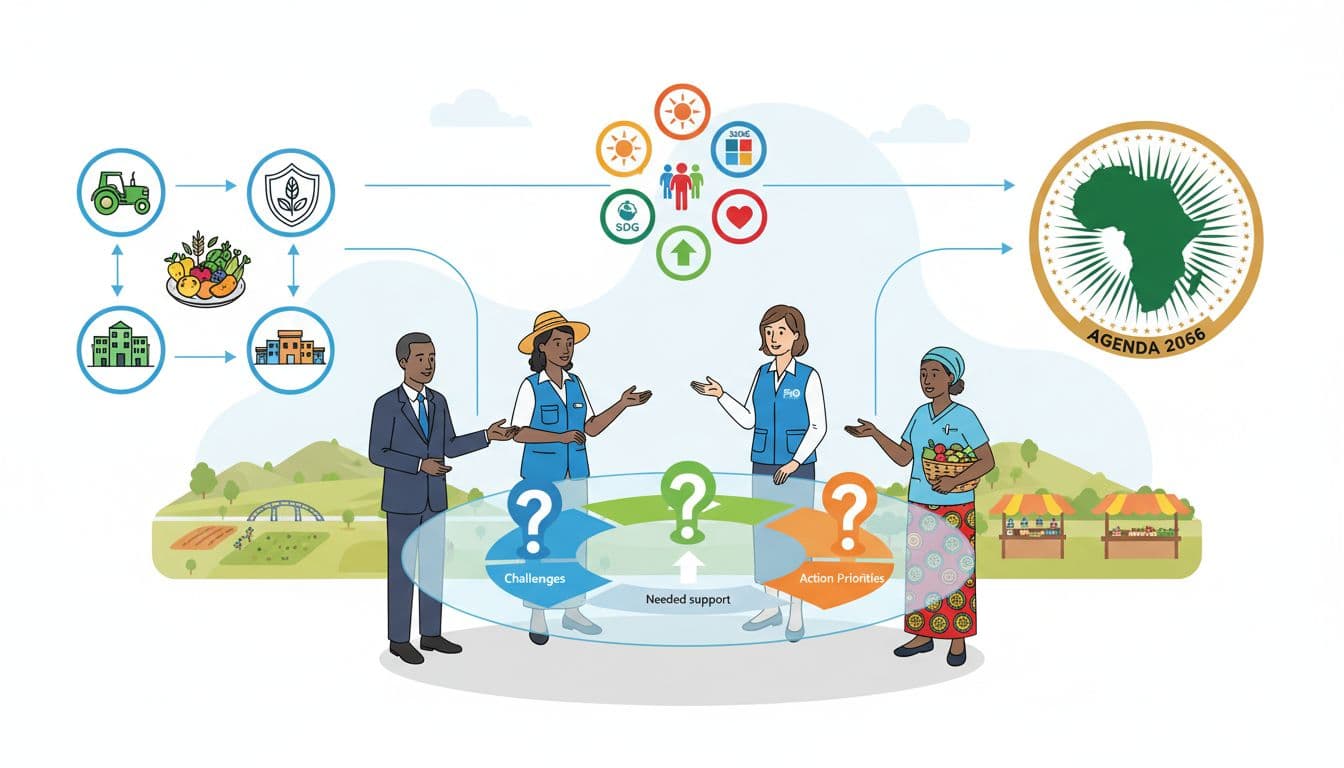
The Country Programming Framework is an agreement between FAO and the government. It sets out the main areas where FAO will support the country over a five-year period.
The CPF answers three simple questions:
- What are the key challenges in agriculture, food systems, and rural development?
- What kind of support is needed to address them?
- In what order should actions take place, given limited time and resources?
The CPF is aligned with:
- National development strategies and sector plans
- The Sustainable Development Goals
- The African Union’s Agenda 2063
By bringing these elements together, the framework creates a clear structure for future projects and investments. It also creates a space where food security, nutrition, and food safety in Central African Republic can be treated together, not in separate boxes.
How the Framework Supports Stronger Food Safety in Central African Republic
A common problem in many countries is that food safety appears in laws and policies, but not in day-to-day practice. Markets, farms, small food businesses, and households do not always benefit from national strategies.
The new programming framework can change this by:
- Making food safety part of national priorities, not just a technical detail
- Linking food safety to resilience, value chains, and public health
- Helping partners align their projects with a shared vision
When food safety is included in the CPF, it becomes easier to:
- Fund food safety projects
- Integrate training into agriculture and nutrition programs
- Coordinate between ministries, agencies, and partners
This is how the framework can support real improvements in food safety in Central African Republic.
Key Stakeholders Shaping Food Safety in Central African Republic
Several actors have an important role in this process:
- Government ministries and agencies
- Agriculture, livestock, health, trade, environment, and others.
- They set policies, implement regulations, and manage public services.
- FAO and other technical partners
- Provide technical guidance, tools, and capacity building.
- Help design and support food safety projects.
- Civil society, producers, and private sector
- Farmers, traders, processors, market managers, and consumer groups.
- They apply practices on the ground and influence behavior.
For food safety in Central African Republic to improve, these actors must move in the same direction. The CPF gives them a shared framework to do that.
My Role as a Food Safety Expert in the Consultation
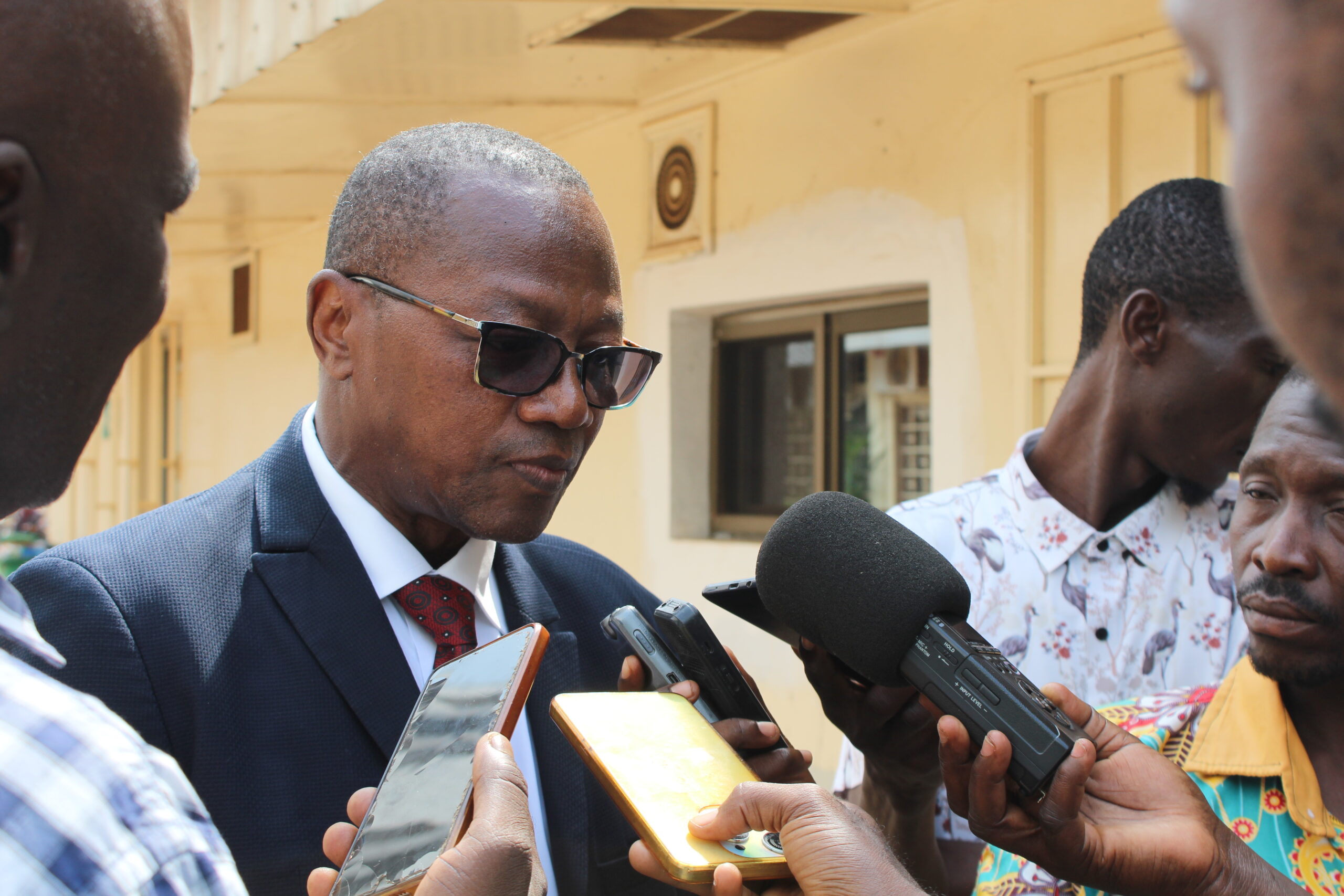
During the Bangui workshop, I contributed as an FAO food safety expert. My role was to help:
- Clarify the objectives of the Country Programming Framework
- Facilitate the discussion on which actions should come first
- Highlight how food safety links to resilience, value chains, and innovation
- Support a shared understanding among government, partners, and civil society
I also stressed that not all actions can start at the same time. Choices are needed. The group discussed:
- Which priorities would have the strongest impact on food security and public health
- Where the country and partners already have capacity to act
- How to avoid duplication between different projects and actors
Food safety featured in these discussions as a core part of safe, nutritious diets and better livelihoods
Priority Areas with Impact on Food Safety in Central African Republic
The workshop discussed and validated several major priority areas. Each of them has a direct or indirect effect on food safety in Central African Republic.
Building Community Resilience for Better Food Safety in Central African Republic
Communities in the country face many shocks. These include conflict, climate change, market volatility, and disease. Resilience means that families and communities can cope with these shocks and continue to live with dignity.
From a food safety angle, resilience is not only about having access to food. It is about having access to safe food. In fragile situations, contamination risks can increase due to:
- Poor storage conditions
- Limited access to clean water
- Damage to infrastructure, including markets and cold chains
- Reduced capacity of public services and inspection systems
By placing resilience as a priority, the CPF opens the door for measures that protect both food availability and food safety in Central African Republic. This includes simple but powerful actions, such as:
- Training on safe food handling in emergency and recovery settings
- Support for safe storage and processing methods
- Community awareness on foodborne disease risks
Strengthening Agricultural Value Chains and Food Safety in Central African Republic
Another core priority is the improvement of agricultural and sylvopastoral value chains. Value chains cover all the steps from production to consumption:
- Inputs and production
- Harvest and primary processing
- Storage and transport
- Wholesale and retail markets
- Preparation and consumption
Each step presents potential hazards. Contamination can occur through dirty water, poor hygiene, unsafe storage, or mixing of safe and unsafe products.
If value chain projects focus only on productivity and income, without food safety, they can create hidden risks. On the other hand, if food safety is integrated early, value chains can deliver safer products and better market opportunities.
Within this framework, there is a strong case to:
- Include good hygiene and handling practices in all value chain projects
- Support small processors and traders to meet basic safety standards
- Strengthen inspection and advisory services along priority chains
This is central to improving food safety in Central African Republic over the long term. I support partners with food safety risk assessment and value chain advisory to identify and manage key hazards along these chains.
Innovation, Research, and Smarter Food Safety in Central African Republic
The CPF also recognizes the importance of innovation and research. For food systems, this means:
- New technologies and tools
- Improved practices based on evidence
- Better data collection and analysis for decision making
Food safety benefits directly from this focus. For example:
- Risk based inspection can help target resources to the highest risks
- Simple, low-cost tools can improve hygiene in traditional markets
- Digital solutions can support traceability and recall when needed
- Research can identify the main causes of foodborne illness in different regions
Innovation does not always mean high technology. Sometimes, the most valuable innovations for food safety in Central African Republic are simple, adapted practices that respond to local realities. The CPF creates space for this type of progress.
From Policy to Practice: Turning the Framework into Safer Food
A strong framework is necessary, but it is not sufficient. Real change happens when policies and plans reach farms, markets, schools, hospitals, and households.
This is why the link between the programming framework and front-line capacity is so important. Training, coaching, and local engagement are essential parts of this bridge.
Why Food Safety Training Is Essential for the New Framework
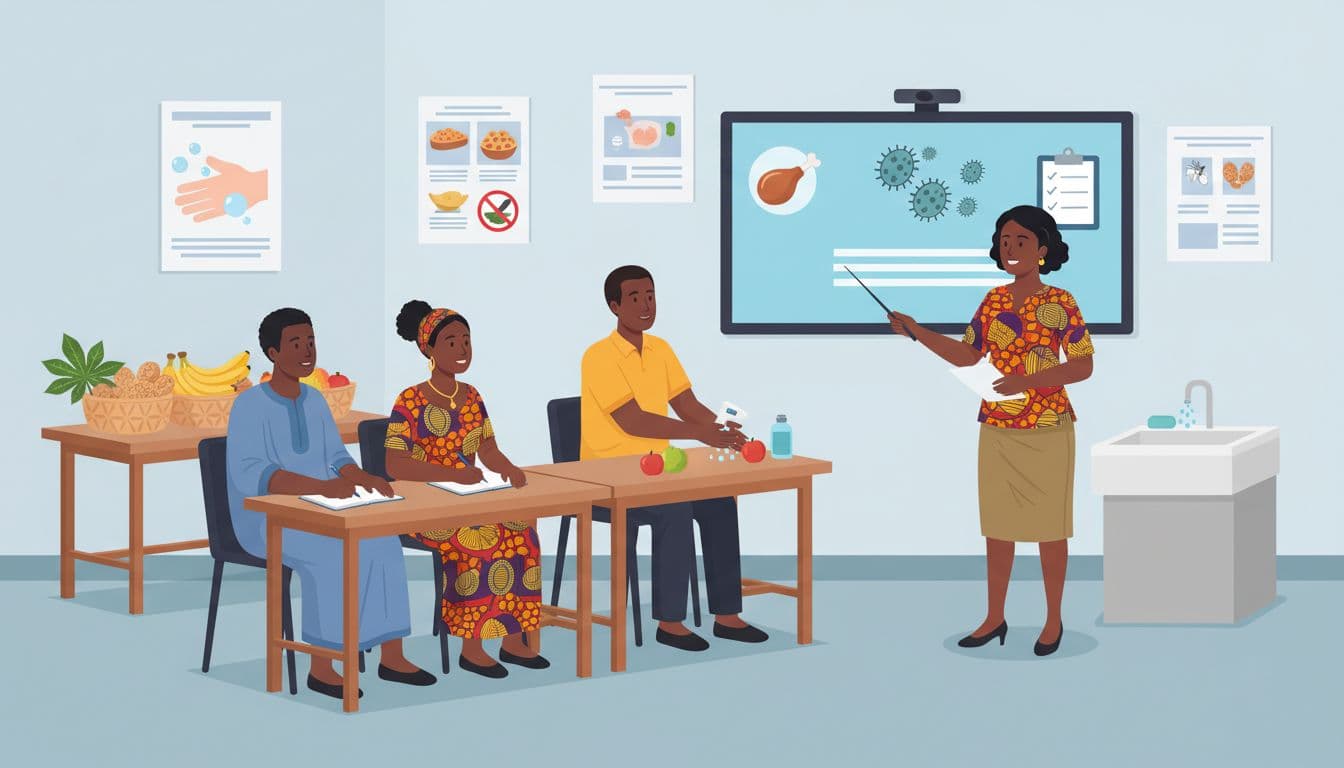
To make the most of the new framework, the country will need strong and continuous efforts in capacity building. Food safety is both technical and behavioral. It involves rules, but also habits.
Closing Capacity Gaps in Food Safety in Central African Republic
There are still many gaps that slow down progress on food safety in Central African Republic. Some of the most common ones include:
- Limited knowledge of basic hygiene and contamination risks among producers and traders
- Weak application of standards such as good hygiene practices or HACCP
- Insufficient training for inspectors and local authorities
- Low awareness among small businesses about the cost of unsafe food for health and the economy
- Lack of practical tools adapted to local conditions
Training can address these gaps by:
- Providing clear, simple guidance
- Using real examples from local value chains
- Building confidence among field staff and small operators
- Encouraging gradual, realistic improvements rather than perfect compliance overnight
When training is aligned with the CPF, it helps transform national priorities into concrete actions. I work with institutions to design and deliver food safety capacity building programs that fit their context and resources.
How My Food Safety Training Programs Support the Framework in Central African Republic
Through my work as a food safety expert, I support governments, development partners, and organizations that want to strengthen food safety in Central African Republic. My training and advisory services can help:
- Assess food safety risks in priority value chains
- Design and deliver tailored training for:
- Producers and farmers
- Traders and market vendors
- Small and medium food processors
- Inspectors and public officials
- Develop or adapt food safety guidelines and tools
- Integrate food safety into agriculture, nutrition, and resilience projects
- Monitor and evaluate progress in food safety capacity building
You can learn more about my approach and services on my Food Safety and Training page.
Examples of Training Topics for Food Safety in Central African Republic
Training programs are adapted to the local context, but often cover areas such as:
- Basic food hygiene and safe handling
- Good agricultural and livestock practices related to safety
- Simple approaches to hazard analysis and critical control points (HACCP)
- Market and street food safety
- Risk communication for food safety officials and community leaders
- Integration of food safety into school feeding, hospital kitchens, or social protection programs
These topics support the broader goals of the CPF and help create a culture of prevention and care in the food system.
Conclusion: A Stronger Future for Food Safety in Central African Republic
The validation of the FAO and government Country Programming Framework 2024 to 2028 is a key step for the Central African Republic. It gives the country and its partners a shared vision for agriculture, resilience, and food systems.
By integrating food safety into this vision, the framework creates an important opportunity. It can help ensure that communities not only have enough food, but also safe food. This is vital for public health, human development, and trust in markets.
To turn this opportunity into reality, the country will need sustained investment in food safety in Central African Republic, especially through practical training and capacity building.
If your ministry, organization, or project is working under, or alongside, the new framework and you want to strengthen food safety:
- Explore my services: Food Safety and Training
- Or get in touch to discuss how we can design tailored training and support for your team and partners.
Together, we can help transform strategic priorities into safer food for all.