
Introduction
GMP and GHP for SMEs provide a simple path to safer food and better compliance. They reduce daily risks. They also make inspections and audits easier.
Many small businesses rush into HACCP. However, HACCP works best after you control the basics. That is where GMP and GHP help. For businesses and teams that need practical support, I also offer food safety training in Africa on hygiene, HACCP, and food control systems. They set clear routines for hygiene, cleaning, and process control.
This guide gives you a practical roadmap you can apply in restaurants, small processors, caterers, and market-based food businesses. It also supports a wider approach to stronger systems and skills. If your team needs hands-on support, explore my food safety training in Africa page. See capacity development in Africa for safer food systems.
If you want a practical reference, the FAO also shares tools and examples. See the FAO Good Hygiene Practices and HACCP toolbox.
Start here: the 10 GMP and GHP basics every SME should control
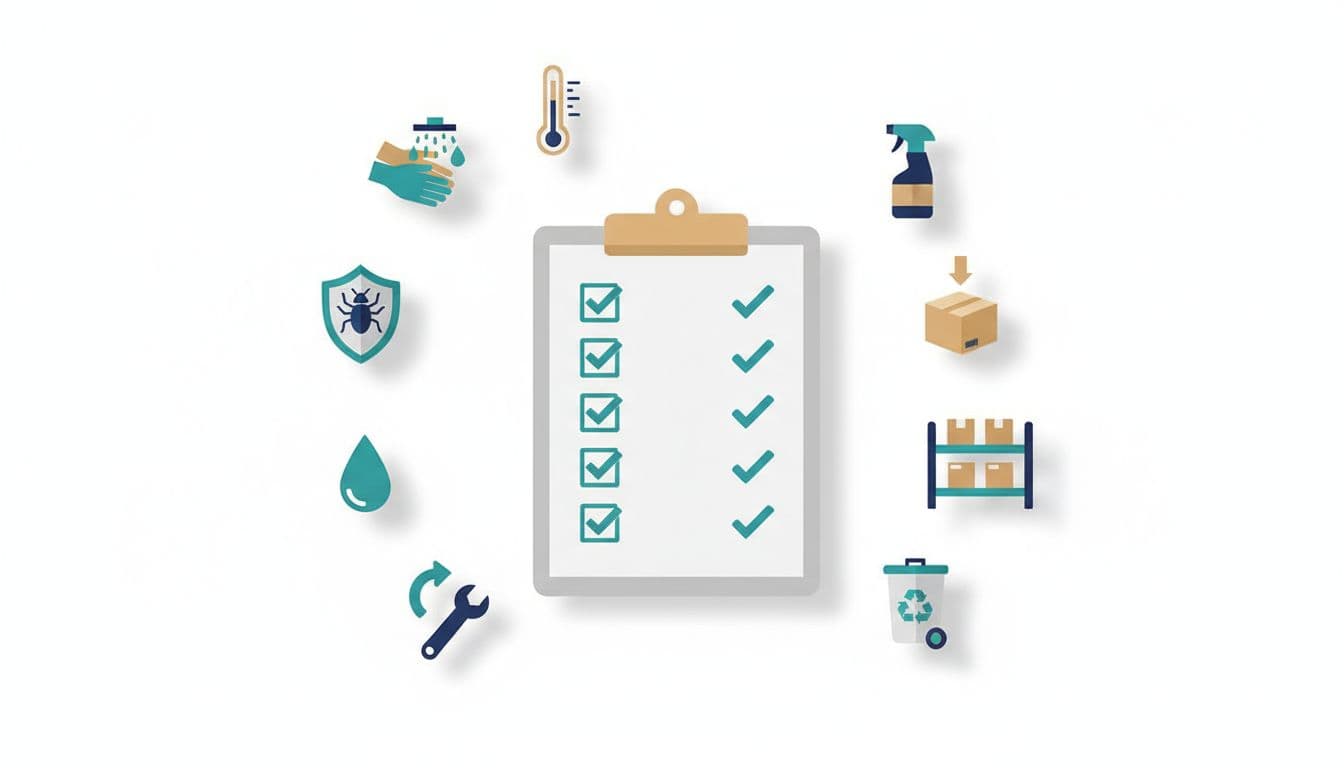
1) Premises and workflow (clean flow, zoning)
Set a clear flow from dirty to clean areas. Separate receiving from preparation and packing. Also separate raw handling from ready-to-eat areas.
Next, reduce dust and standing water. These conditions raise contamination risk.
2) Water, ice, and utilities
Use safe water for cleaning and handwashing. Check supply quality when possible. Also maintain drains to prevent backflow.
If power fails often, plan backups for cold storage. Otherwise, temperature control fails fast.
3) Cleaning and sanitation in GMP and GHP for SMEs (SSOPs)
Create short cleaning and sanitation SOPs. Define what to clean, how to clean, and when to clean. Include chemical dilution and contact time.
Then verify cleaning with a simple check. For example, visual inspection or basic swabs when available.
4) Personal hygiene and illness reporting
Set rules for handwashing, clean clothing, and glove use when needed. Place handwash stations close to work areas. Keep soap and towels in stock.
Also set an illness reporting rule. Sick staff should not handle food.
5) Pest control
Close entry points. Keep doors protected. Store ingredients off the floor and away from walls.
Then monitor pests weekly. Act quickly when you see signs.
6) Equipment control (cleanability and maintenance)
Choose equipment that you can clean fully. Fix damaged surfaces and worn seals. Replace cracked boards and rusted parts.
Also control your measuring tools. Calibrate thermometers and scales on a schedule.
7) Supplier approval and receiving checks in GMP and GHP for SMEs
Buy from known suppliers. Set basic receiving checks. Confirm packaging integrity, labeling, and temperatures when relevant.
When a delivery fails your rules, reject it. This step prevents problems inside your facility.
8) Storage and temperature control in GMP and GHP for SMEs
Control storage conditions for each product type. Use thermometers you trust. Record key temperatures at set times.
Also prevent overload in fridges and freezers. Good airflow protects product safety.
9) Cross-contamination control (people, tools, surfaces)
Separate tools for raw and ready-to-eat tasks. Use color coding if possible. Clean and sanitize between tasks.
In addition, control hands. Change gloves when tasks change. Avoid bare-hand contact with ready-to-eat foods.
10) Waste management and drainage
Remove waste often. Keep bins covered. Clean waste zones daily.
Finally, prevent water pooling. Wet floors spread contamination and attract pests.
A simple GMP and GHP for SMEs roadmap (30–60–90 days)
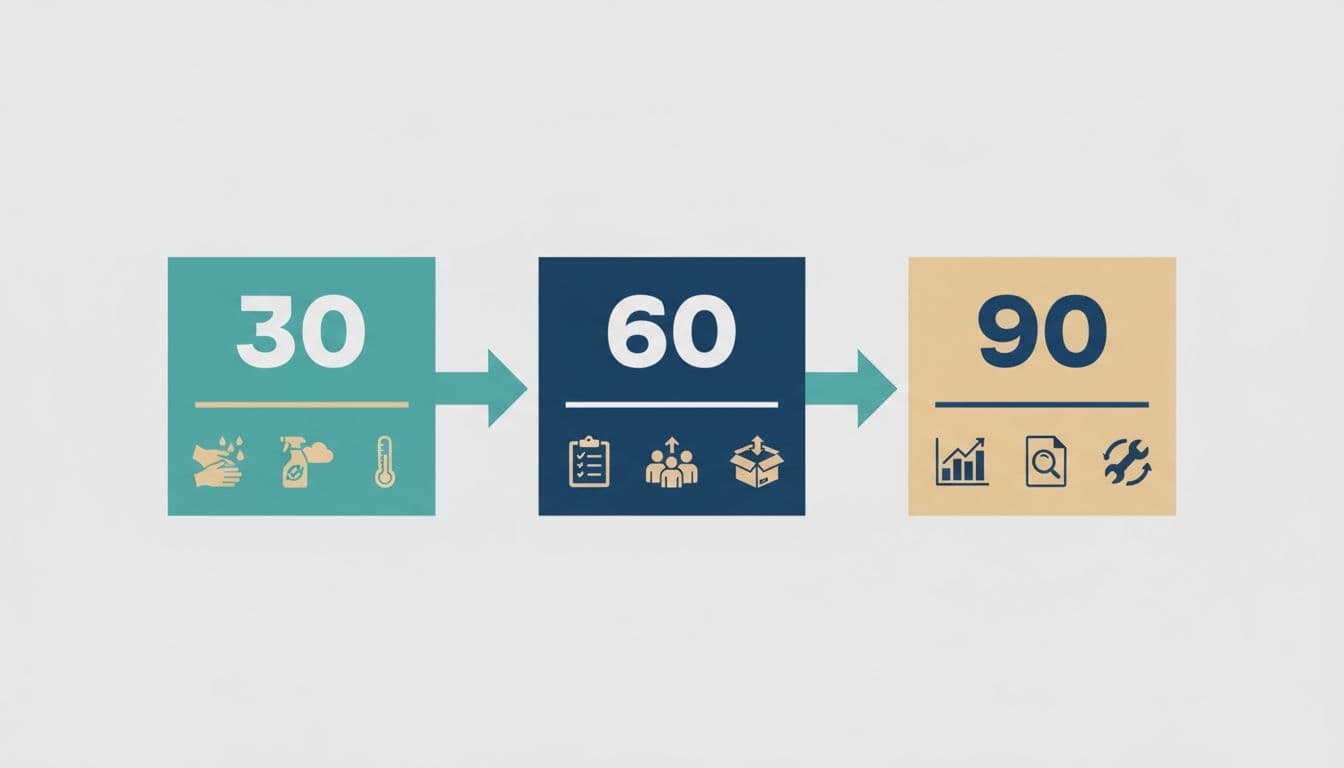
This roadmap helps you move from quick fixes to stable control. It fits most sectors. It also supports GMP and GHP for SMEs without heavy paperwork. If you want help applying these steps in practice, see my food safety training in Africa services.
Days 1–30: Stabilize the basics
Focus on the highest-risk failures first. Then create simple routines.
Set clear roles
- Assign one person to lead hygiene and checks.
- Assign backups for weekends and shifts.
Fix the minimum tools
- Get reliable thermometers.
- Stock cleaning chemicals and test strips (if you use them).
- Ensure handwashing supplies stay available.
Create short SOPs (one page each)
- Handwashing and personal hygiene.
- Cleaning and sanitation (what, how, when).
- Receiving checks.
- Storage and temperature control.
- Waste handling.
Start simple records
- Temperature log (1 page).
- Cleaning checklist (1 page).
- Receiving checklist (1 page).
Do quick training
Train staff on the new SOPs. Keep it short. Repeat it on shift. Also show, then watch, then correct.
Days 31–60 in GMP and GHP for SMEs: standardize and train
Now reduce variation between staff and shifts. This is where good hygiene practices (GHP) become routine.
Standardize the workflow
- Mark zones for raw, ready-to-eat, and cleaning tools.
- Set a clear product flow. Reduce cross-traffic.
Improve supervision
- Add a daily 5-minute hygiene check.
- Review logs at the end of each shift.
Strengthen supplier control
- List approved suppliers.
- Set clear acceptance and rejection rules.
- Record delivery failures and actions.
If you want a standards-based view of what buyers and regulators expect, read Codex Alimentarius 2026: what African SMEs need to know.
Build a simple food safety training plan
Start with food safety training needs assessment to target the most common gaps by role and shift.
Focus on job tasks, not theory. For example, train on dilution, temperatures, and separation. Also include new hire onboarding.
Use a practical reference
For examples and tools, use the FAO resource on good hygiene practices and HACCP.
Days 61–90 in GMP and GHP for SMEs: Verify and improve
Next, prove your system works. Then improve weak points.
Add verification
- Do a weekly walkthrough using a checklist.
- Spot-check key practices (handwashing, storage, cleaning).
- Confirm corrective actions happen after failures.
Use simple corrective actions
When a check fails, act the same day.
- Fix the cause.
- Protect the product.
- Record what you did.
Review trends
Look at your logs weekly. Find repeat issues. Then adjust SOPs, training, or tools.
Prepare for HACCP (if needed)
At this stage, your prerequisites stabilize. Now you can start HACCP with less stress. For a practical structure you can adapt, see my HACCP plan for restaurants and apply the same logic to your process. This is the link between good manufacturing practices (GMP) and HACCP prerequisites (PRPs).
Minimum documents for GMP and GHP for SMEs (SOPs and records)
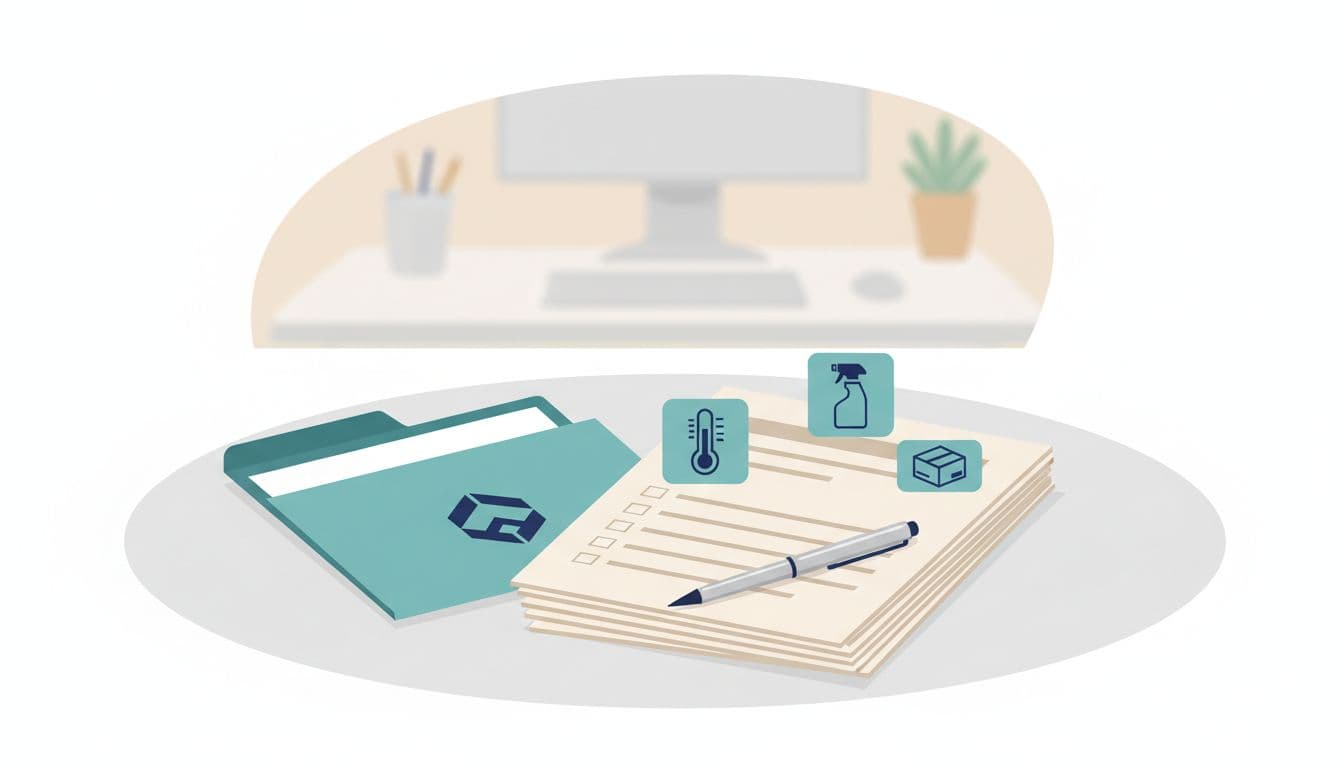
You do not need heavy paperwork to run GMP and GHP for SMEs. However, you do need a few documents that guide daily work. You also need records that prove control during inspections.
SOPs you need (short and usable)
Keep SOPs short. One page is enough for most tasks. Use simple steps. Use clear roles.
Start with these SOPs:
- Personal hygiene and handwashing
- Cleaning and sanitation (SSOP)
- Chemical control (storage, dilution, labeling)
- Receiving and supplier checks
- Storage and temperature control
- Cross-contamination control (tools, surfaces, flow)
- Pest control checks
- Waste handling and drainage
- Equipment cleaning and maintenance
- Product recall basics (who to call, what to stop, how to trace)
Next, place SOPs where work happens. For example, post the cleaning SOP near the wash area. Also keep a master file for managers.
Records you need in GMP and GHP for SMEs (only what you use)
Records should support action. If nobody reviews a record, remove it.
Use these core records:
- Temperature log (cold storage, cooking, hot holding, cooling if relevant)
- Cleaning checklist (daily and weekly)
- Receiving log (supplier, date, key checks, acceptance or rejection)
- Pest check log (weekly quick check)
- Maintenance log (repairs, calibration, breakdowns)
- Training log (date, topic, names, trainer)
- Corrective action log (what failed, what you did, who fixed it, when)
Then review logs on a schedule. Daily review works for temperatures and cleaning. Weekly review works for pests and maintenance.
This set supports food safety prerequisites. It also prepares you for HACCP prerequisites (PRPs).
How long to keep records (simple rule)
Keep it simple and consistent.
Use this rule:
- Keep daily logs for at least 3 months.
- Store training and maintenance records for at least 12 months.
- For supplier records, keep them as long as you buy from that supplier, plus 3 months.
However, local rules vary. So, confirm with your regulator or buyer requirements.
A simple way to avoid paperwork overload
Use one page per day. Use checkboxes when possible. Also assign one person to collect and file forms.
Finally, set a weekly review. Small reviews prevent big failures.
How GMP and GHP for SMEs connect to HACCP (PRPs and CCPs)
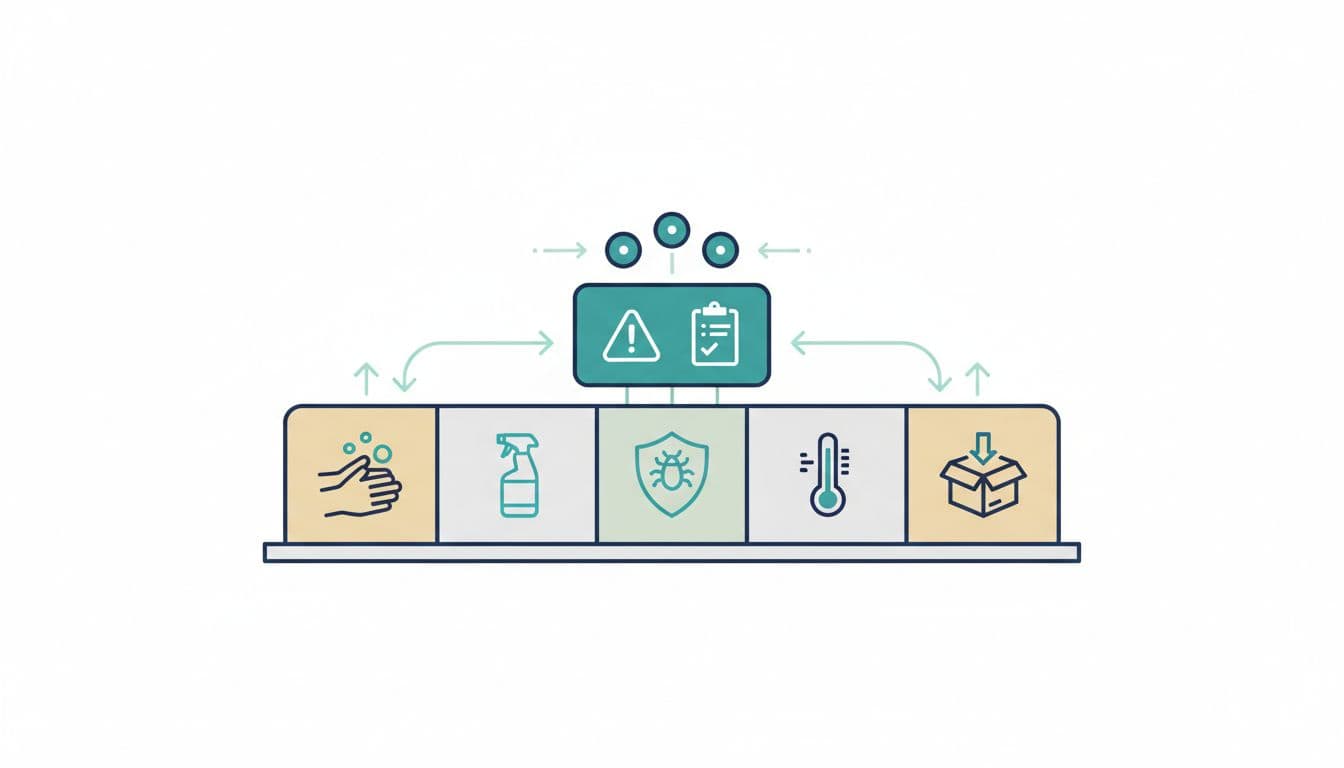
GMP and GHP for SMEs create the base for safe production. They control everyday risks. They also reduce the number of hazards that reach your HACCP plan.
Think of GMP and GHP as the foundation. Then use HACCP to control the few steps where failure causes high risk.
What GMP/GHP prevents
Good hygiene practices (GHP) prevent many common failures. Good manufacturing practices (GMP) also reduce process variation.
GMP and GHP help you control:
- Dirty hands and poor personal hygiene
- Weak cleaning and sanitation routines
- Cross-contamination between raw and ready-to-eat foods
- Poor pest control
- Unsafe water or ice
- Bad storage practices and weak temperature control
- Poor receiving checks and weak supplier control
- Unclear workflow and mixed traffic in the facility
As a result, daily operations stay more stable. Also, staff follow clearer rules.
What HACCP controls that GMP/GHP cannot
Some hazards need tighter control. These hazards require critical limits and monitoring.
HACCP focuses on:
- Steps where a kill step matters (cooking, pasteurization)
- High-risk cooling steps
- Metal detection or sieving (when relevant)
- Final product controls that protect consumers
In other words, HACCP adds precision. It tells you exactly what to measure and what to do when limits fail.
For a practical structure you can adapt, see my HACCP plan for restaurants and apply the same logic to your process.
When you are ready to write a HACCP plan
You are ready when your basics stay consistent.
Use this quick readiness check:
- Staff follow hygiene rules without constant reminders.
- Cleaning happens on schedule and gets verified.
- Thermometers work and get used daily.
- Temperatures get recorded and reviewed.
- You act when checks fail.
- Suppliers meet your receiving rules.
- You keep simple records for at least four weeks.
If these points hold, move to HACCP. If not, fix prerequisites first. This approach saves time. It also makes audits easier.
How GMP and GHP for SMEs connect to HACCP (PRPs and CCPs)
Many SMEs try to improve fast. However, a few common mistakes slow progress. Fixing them makes GMP and GHP for SMEs easier to run.
Mistake 1: You clean, but you do not verify
Cleaning happens, yet dirt and risk stay.
Quick fixes
- Add a simple “before and after” visual check.
- Use checklists with a supervisor sign-off.
- Focus on high-touch points first (handles, switches, taps).
Mistake 2: You rely on memory instead of simple SOPs
Staff change. Shifts change. Then practices drift.
Quick fixes
- Write one-page SOPs for key tasks.
- Post SOPs where work happens.
- Train with a short demo. Then observe and correct.
Mistake 3: You record data, but nobody reviews it
Logs sit in a folder. Problems repeat.
Quick fixes
- Review temperature and cleaning logs daily.
- Mark failures in red. Act the same day.
- Track repeat failures weekly. Fix the cause.
Mistake 4: You do not control thermometers and measuring tools
You cannot control temperatures without reliable tools.
Quick fixes
- Buy at least one reliable thermometer.
- Calibrate on a simple schedule.
- Replace tools that drift or break often.
Mistake 5: You treat suppliers as “out of scope”
Unsafe inputs create unsafe outputs.
Quick fixes
- Set receiving rules with clear reject criteria.
- Keep a simple approved supplier list.
- Record delivery failures and actions.
If you want a standards-based view of expectations, read Codex Alimentarius 2026: what African SMEs need to know.
Mistake 6: Training happens once, then stops
One session does not change habits.
Quick fixes
- Use short refreshers each week.
- Coach on the job during real tasks.
- Start with a food safety training needs assessment so training targets real gaps.
Mistake 7: You try to fix everything at once
Big plans often stall. Then teams give up.
Quick fixes
- Pick the top 3 risks first.
- Stabilize them for 4 weeks.
- Then add the next priorities.
Next steps for your GMP and GHP for SMEs Journey
You can start this week. Keep it simple. Focus on action.
SME checklist for this week
- Walk through your process and mark dirty and clean zones.
- Fix one high-risk issue fast (handwashing, storage, or cleaning).
- Write two one-page SOPs (cleaning and receiving).
- Start two logs (temperature and cleaning).
- Review logs daily and act on failures the same day.
- Train teams on the SOPs with a short demo. Then observe and correct.
Next, repeat this cycle each week. Small steps build strong habits.
Use these resources
Use the FAO tools for practical examples and guidance.
If you want to target training to real gaps, start with a food safety training needs assessment.
When your basics stay stable, move to HACCP. Use this guide as a starting point: HACCP plan for restaurants.
GMP and GHP improve day-to-day control. However, long-term progress needs skills, systems, and follow-up. Read capacity development in Africa for safer food systems to connect this roadmap to a wider plan.
A simple roadmap is a good start, but real improvement depends on consistent action. If your business or team needs tailored support, explore my food safety training in Africa services.