
Is Codex Alimentarius law in your country or export market? Many QA and regulatory teams ask this early. The answer affects specs, audits, labels, and enforcement discussions. Many teams ask, Is Codex Alimentarius law for audits, exports, and inspections?
Codex Alimentarius does not create national legal duties by itself. Countries choose how they use Codex texts. Buyers can also create duties through contracts. If your team needs help applying Codex in real regulatory or business contexts, explore my food safety training in Africa page. If your team needs help applying Codex in real regulatory or business contexts, explore my food safety training in Africa page.
New to Codex overall? Start with my main guide first: Codex Alimentarius: Simple Guide to Food Standards
Is Codex Alimentarius law or voluntary?
Codex Alimentarius is a collection of international food standards and guidance. FAO and WHO support the Codex program. Member countries agree on texts through committees and Commission sessions.
Codex does not automatically become national law. National authorities create laws through national legal processes. Courts enforce national law, not Codex texts.
Still, Codex influences real compliance work. Regulators use Codex as a reference. Buyers also cite Codex in specifications.
You can confirm the official program on the Codex Alimentarius (FAO/WHO) website.
Is Codex Alimentarius law or legally binding in practice?

The question Is Codex Alimentarius law has different answers in different countries. Codex is not legally binding by default. Codex becomes binding only when a country adopts it into law. Contracts can also make Codex binding for suppliers.
Think in three layers:
- Codex as a global reference
- Codex in national regulations
- Codex in private standards and contracts
Each layer changes your compliance risk. Each layer changes the evidence you need.
How countries use Codex in national regulations (4 common approaches)
Countries use Codex in different ways. Legal traditions shape the approach. Resources and priorities also influence choices.
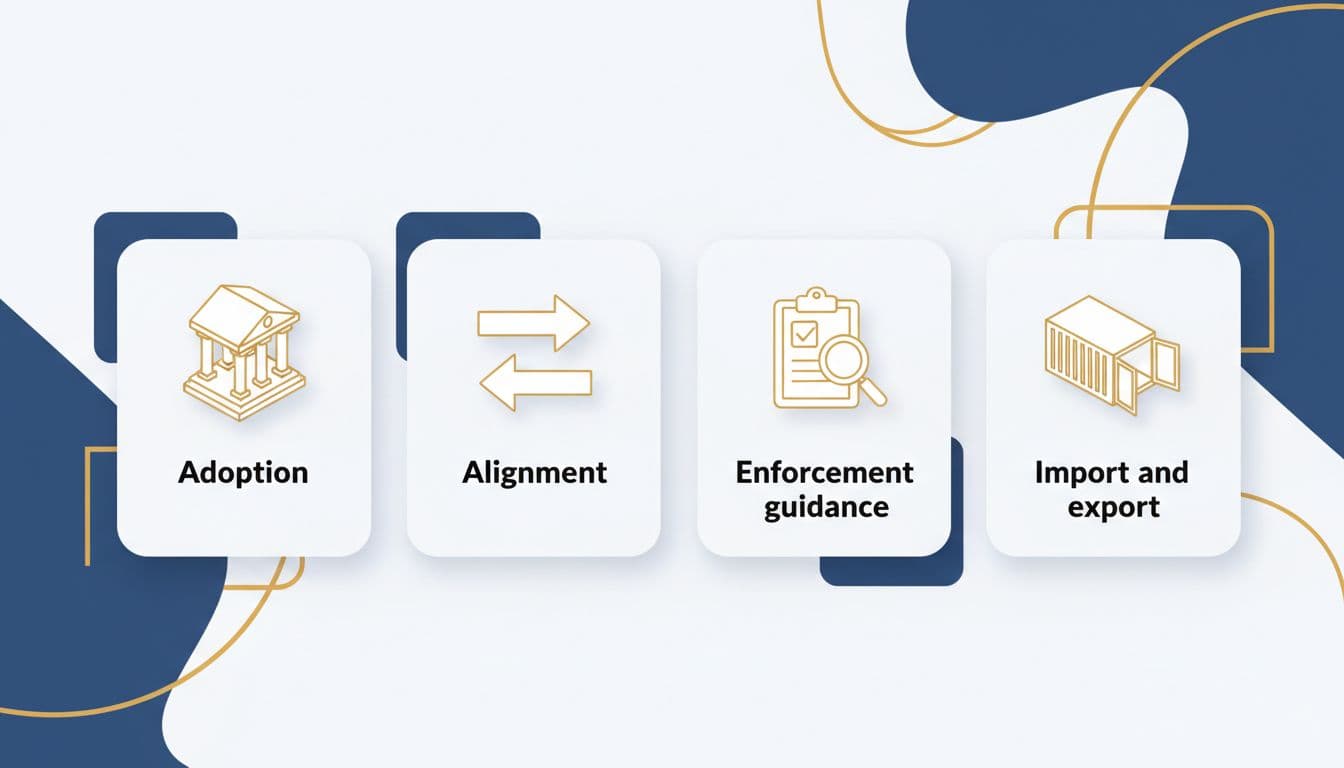
Direct adoption: Codex becomes national law
Some countries copy Codex into regulations. They may adopt a standard as written. Others adopt a standard with local edits.
This method speeds up rulemaking. It also supports harmonization across borders. Many capacity building projects promote this path. Where implementation remains weak, food safety training in Africa can help institutions and teams turn Codex-based requirements into practical action.
QA impact: Treat adopted Codex clauses like law. Track local amendments and updates. Keep evidence for each requirement.
Alignment: national rules follow Codex without copying text
Many countries align laws with Codex without copying text. They follow Codex principles and definitions. They keep national legal structure and terms.
This method fits local food systems better. It also allows tailored risk controls. Governments often prefer this flexibility.
QA impact: Compare national rules with Codex. Document differences in a mapping table. Train teams on the stricter requirement.
Enforcement guidance: inspectors use Codex as a benchmark
Some inspectorates reference Codex during inspections. Inspectors may use Codex when local rules stay unclear. This practice fills gaps during enforcement. In these cases, food safety training in Africa can help regulators, inspectors, and technical teams apply Codex more consistently.
Consistency improves when inspectors share a reference. Training programs often use Codex language. Industry then hears Codex terms in the field.
QA impact: Prepare to discuss Codex during inspections. Show how your controls meet Codex intent. Keep records easy to retrieve.
Border control: Codex use in imports, exports, and equivalence
Border control teams often face mixed products and claims. Codex supports consistent decisions on safety expectations. It can also help in equivalence discussions.
QA impact: Build an export compliance file. Include local law, buyer rules, and Codex references. Keep a clear decision record for deviations.
Is Codex Alimentarius law for your product? 5-question test
Use these five questions in order:
- Does the target market law cite Codex?
- Does your national law adopt Codex clauses?
- Does inspector guidance reference Codex?
- Does your buyer contract require Codex alignment?
- Does your internal standard use Codex as a baseline?
This test answers Is Codex Alimentarius law for your product and market. Any “yes” answer makes Codex relevant. Legal force still varies by layer. Your documentation should match that risk.
Codex voluntary standards in audits and buyer requirements
Codex shapes private requirements in many sectors. Buyers want one baseline across many suppliers. Global brands also want a defensible basis for limits.
Codex provides that baseline. It offers internationally agreed language. That agreement helps during supplier disputes.

Contracts: when Codex becomes legally binding for suppliers
Buyers often ask, Is Codex Alimentarius law in contracts and supplier agreements? A buyer can write, “Supplier shall comply with Codex.” Procurement can also reference Codex limits and methods.
Once a contract cites Codex, Codex becomes enforceable through the contract. Disputes then focus on interpretation and evidence. QA teams often manage that evidence.
QA tip: Add Codex checks to contract review. Ask procurement to share drafts early. Keep a simple Codex clause library for common products.
Audits: how Codex shapes buyer requirements and audit questions
Many private schemes align with Codex principles. Auditors also use Codex language in interviews. They may ask about Codex even without direct citations.
QA tip: Train teams on Codex basics. Use simple examples from your product line. Document your decision logic in short records.
Codex and the WTO SPS Agreement (trade and disputes)
Trade creates pressure for consistent food safety rules. Countries protect consumers and support fair practices. Shared references reduce conflict between those goals.
The WTO SPS Agreement guides food safety measures in trade and often points decision-makers toward international references like Codex.
WTO SPS: what QA teams should document for trade
Exporters should keep a strong evidence package. Importers should justify safety requirements clearly. Codex can support both sides of that file.
Build a compliance folder that includes:
- target market legal citations
- Codex references you used
- risk rationale for key controls
- test results and methods
- supplier evidence and audit reports
This folder reduces border delays. It also supports calm responses during questions.
Codex is not law”: 3 compliance failures QA teams see
Teams sometimes misuse the word “voluntary.” They treat Codex as optional. That choice can create avoidable risk.
Spec risk: “Codex compliant” claims without measurable requirements
Specs sometimes say “meets international standards.” That phrase creates room for interpretation. Suppliers then deliver different product profiles.
Fix the issue with specific requirements. Use Codex standards for identity and composition. Add test methods and acceptance criteria.
Control risk: missing Codex-based preventive controls and PRPs
Teams sometimes ignore Codex codes of practice. Old SOPs can miss key hazard controls. Plants then repeat the same findings.
Fix the gap with a control mapping exercise. Map Codex code recommendations to PRPs and SOPs. Assign monitoring and records for each control.
Label risk: Codex baseline vs target market law conflicts
Some teams rely on generic labeling guidance only. They forget product standards and target market rules. Labels then fail during review or at the border.
Fix the workflow with a clear order. Start with target market law. Use Codex as a baseline and cross-check.
How to use Codex without treating it like national law
You can apply Codex in a disciplined way. This workflow fits industry and regulators. It also keeps records clear for audits.
Step 1: start with target market law (legal baseline)
Start with target market regulation and guidance. Use official sources and consolidated versions. Confirm scope, definitions, and exemptions.
Write a short “legal summary” for the product. Keep it under one page. Update it during change control.
Step 2: use Codex texts to align terms and fill gaps
Next, check Codex texts for the same topic. Use Codex definitions to clarify terms. Use Codex principles to support consistent decisions. Find the official documents in the Codex Texts database.
Step 3: map law vs Codex vs buyer rules (one table)
Build a simple requirement mapping table. Keep it practical and short. Use three columns:
- Law requirement
- Codex reference
- Company control and evidence
This table reduces debate during audits. It also speeds up approvals.
Step 4: verify Codex-based decisions with records and tests
Verification creates proof. Proof drives trust during inspections. QA teams should plan evidence from day one.
Examples of evidence:
- product specs and COAs
- label approval records
- sanitation records and trend charts
- supplier audits and CAPAs
- test results and method references
Do inspectors treat Codex as law? What to expect in inspections
Inspectors follow national laws and official guidance. Many inspectors still reference Codex for interpretation. That habit supports consistency between inspectors.
Operators should expect Codex questions. Compliance teams should prepare short answers. A good answer uses three parts.

Train staff to answer:
- Which law controls this requirement?
- Which Codex text supports our approach?
- Which records prove control today?
Inspectors may still ask, Is Codex Alimentarius law when national rules stay general. This method keeps discussions focused. It also reduces friction during inspections.
How to check if your country adopted Codex into law
You can confirm adoption without guessing. Use a simple evidence search. Document results for your compliance file.
Search national law: find Codex references in legal databases
Search for “Codex” and key terms. Look for citations like “Codex Alimentarius.” Save the relevant pages or PDFs.
Check authorities: standards bodies and food agencies that cite Codex
Many countries publish national standards online. Food authorities also publish guidelines for inspectors. Those documents may cite Codex directly.
Confirm adoption: ask the national Codex Contact Point
Each member country has a Codex Contact Point. That office often coordinates comments and participation. The contact point can clarify national positions and use.
Confirm scope: products covered, dates, and legal status
Adoption can apply to certain products only. It can also apply to certain topics only. Effective dates also matter for enforcement.
Record findings: document Codex legal status in your mapping table
Add “adopted” or “referenced” in a notes column. Cite the exact legal instrument. Keep the link or file in your compliance folder.
This process supports audits and due diligence. It also supports policy discussions.
Real examples: when “Codex is voluntary” still affects decisions
QA example: resolving Codex vs law vs buyer spec conflicts
A customer asks for “Codex compliance” for a processed food. The target market law sets stricter labeling rules. The supplier wants to follow Codex only.
QA should not argue in general terms. The team should map requirements and show the strictest requirement. QA should then update the spec and label checklist.
A strong response includes:
- the legal citation and the clause
- the Codex reference used as baseline
- the final internal requirement
- the verification record plan
This approach prevents disputes later. It also protects the business during audits.
Regulator example: using Codex codes to design inspection tools
A regulator updates inspection tools for SMEs. National law lists general hygiene duties. Inspectors need practical checks for daily use.
The regulator can use a Codex code of practice as a reference. That code can guide checklist items and training language. The regulator should still cite national legal authority.
A strong checklist links each check to:
- the legal duty
- the risk it controls
- the evidence inspectors should review
This approach improves consistency across regions. It also helps SMEs understand expectations.
Codex Procedural Manual: how Codex texts gain weight in practice
Codex follows formal procedures for text development. The Codex Procedural Manual describes those rules. Policy teams use it when they submit comments.
This manual also helps national Codex committees. It clarifies roles, steps, and decision rules. Codex explains these rules in the Codex Procedural Manual (FAO/WHO).
Checklist: is Codex mandatory for you (law, contracts, audits)?
Use this checklist during launches and export planning.
- I identified target market laws and official guidance.
- I checked if law cites Codex directly.
- I reviewed relevant Codex standards, guidelines, and codes.
- I mapped law vs Codex vs buyer requirements.
- I selected the strictest applicable requirement.
- I documented verification steps and responsible owners.
- I trained teams on evidence and records.
This checklist fits QA workflows. It also supports regulatory due diligence.
Training: apply Codex in QA and regulatory work
Teams often understand Codex concepts but struggle with daily use. Training improves specs, audits, and inspection tools. It also strengthens policy alignment.
Learn more about my training support here: Food safety training in Africa
Key takeaways: Is Codex Alimentarius law?
Is Codex Alimentarius law depends on adoption, enforcement practice, and contracts. Codex does not act as national law by default. Codex still drives compliance through market expectations and trade contexts. Strong teams map law, Codex, and buyer rules in one workflow.
Next in the Codex series
How to Find Codex Standards Online (Fast and Correct)