
In my experience working with African regulators, one truth becomes painfully clear: fragmented national food control systems in Africa are not just administrative hurdles; they are active threats to public health and economic growth. When I walk into a meeting with a Ministry of Agriculture, followed by a separate meeting with a Ministry of Health, and another with a Bureau of Standards—all operating in silos—I see the direct cause of the food safety crises that plague our continent.
We cannot afford to ignore this reality. The World Health Organization’s newly updated 2026 estimates reveal that the African and South-East Asian regions together account for nearly three-quarters of all foodborne illnesses and 60% of global deaths [1]. Globally, unsafe food causes around 866 million illnesses and 1.52 million deaths annually, with young children bearing a disproportionate burden [1]. Beyond the tragic human toll, the World Bank calculates that unsafe food costs low- and middle-income countries $110 billion annually in lost productivity and medical expenses [2]. In Africa alone, the productivity losses are estimated at $16.5 billion [3].
Yet, when we look for the root cause, it is rarely a lack of scientific knowledge. More often, it is a failure of food safety governance. In this post, I will break down the true cost of fragmented food control systems, why inter-agency coordination is the only viable path forward, and how we can begin to fix these structural failures.
Why Fragmentation is Failing Africa
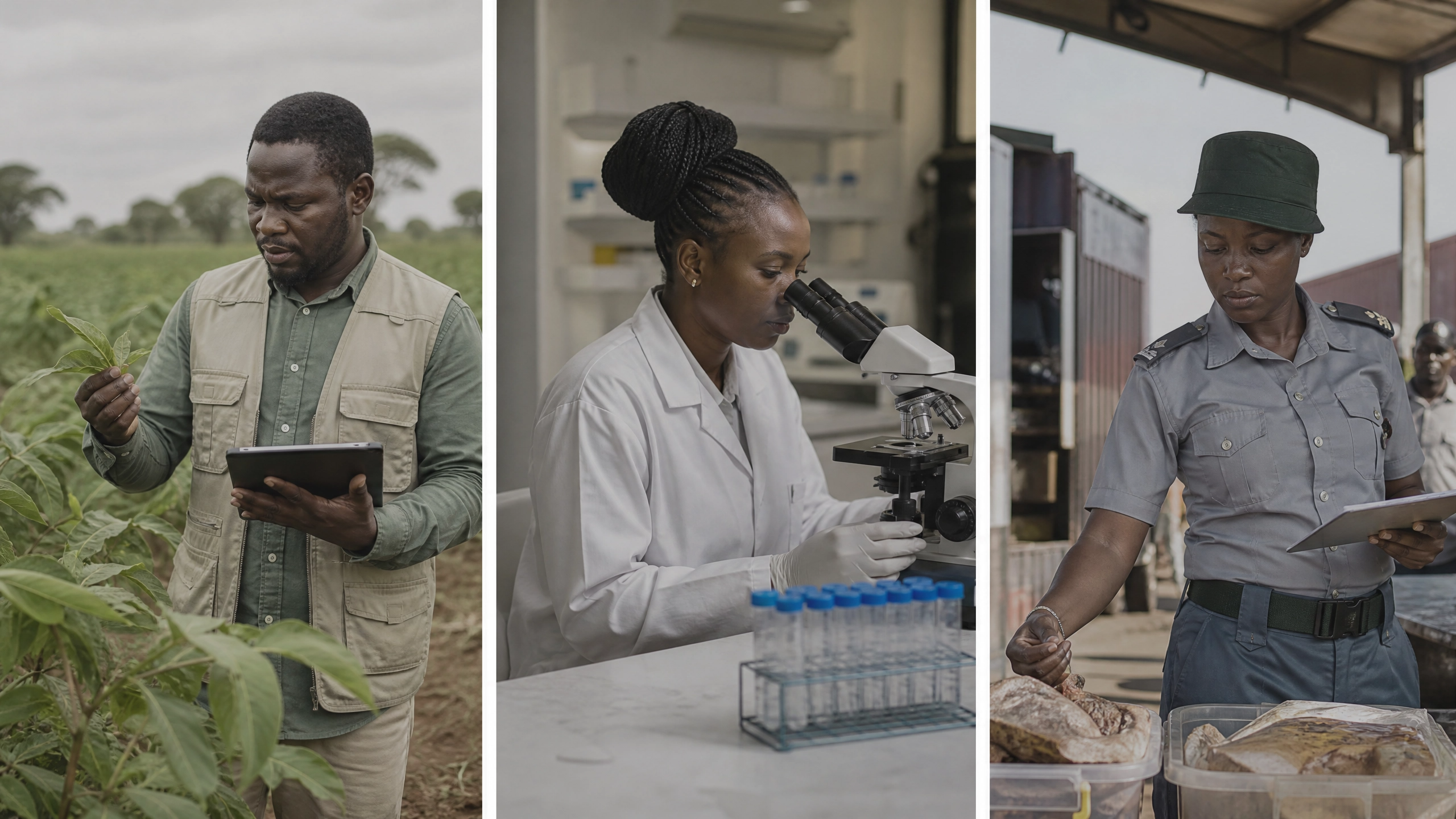
To understand the cost of fragmentation, we must first look at how most national food control systems in Africa are structured. Historically, food safety responsibilities have been divided among multiple ministries. Agriculture handles the farm level (pesticides, animal health), Health manages public health and catering, Trade oversees imports and exports, and a Bureau of Standards sets the technical requirements.
While this might seem logical on paper, in practice, it creates a labyrinth of overlapping mandates and glaring regulatory gaps.
1. The Burden of Overlapping Jurisdictions
When multiple agencies have the authority to inspect the same food facility, the result is chaos. I often see SMEs (Small and Medium Enterprises) subjected to conflicting demands. An inspector from the Ministry of Health might require one standard for hygiene, while an inspector from the Bureau of Standards demands another. This not only frustrates business owners but also breeds a culture of non-compliance. When the rules are contradictory, businesses often choose to follow none of them, or they simply pay the fines as a cost of doing business.
2. The Danger of Regulatory Gaps
Conversely, when agencies fail to communicate, critical areas of the food chain are left entirely unmonitored. A classic example is the transition from farm to market. The Ministry of Agriculture might monitor pesticide use on the farm, but once the produce reaches the informal market, it often falls out of their jurisdiction. If the Ministry of Health or local municipal authorities do not step in, that produce—potentially laden with chemical residues—reaches the consumer unchecked.
3. Inefficient Use of Scarce Resources
African competent authorities operate under severe budget constraints. For many, the cost of a single comprehensive food control assessment may exceed their annual budget [4]. In a fragmented system, these scarce resources are squandered. We see multiple agencies maintaining separate, underfunded laboratories instead of pooling resources to build one state-of-the-art national reference laboratory. We see duplicated inspection efforts in urban centers while rural areas receive no oversight at all.
The Economic Impact of Poor Inter-Agency Coordination
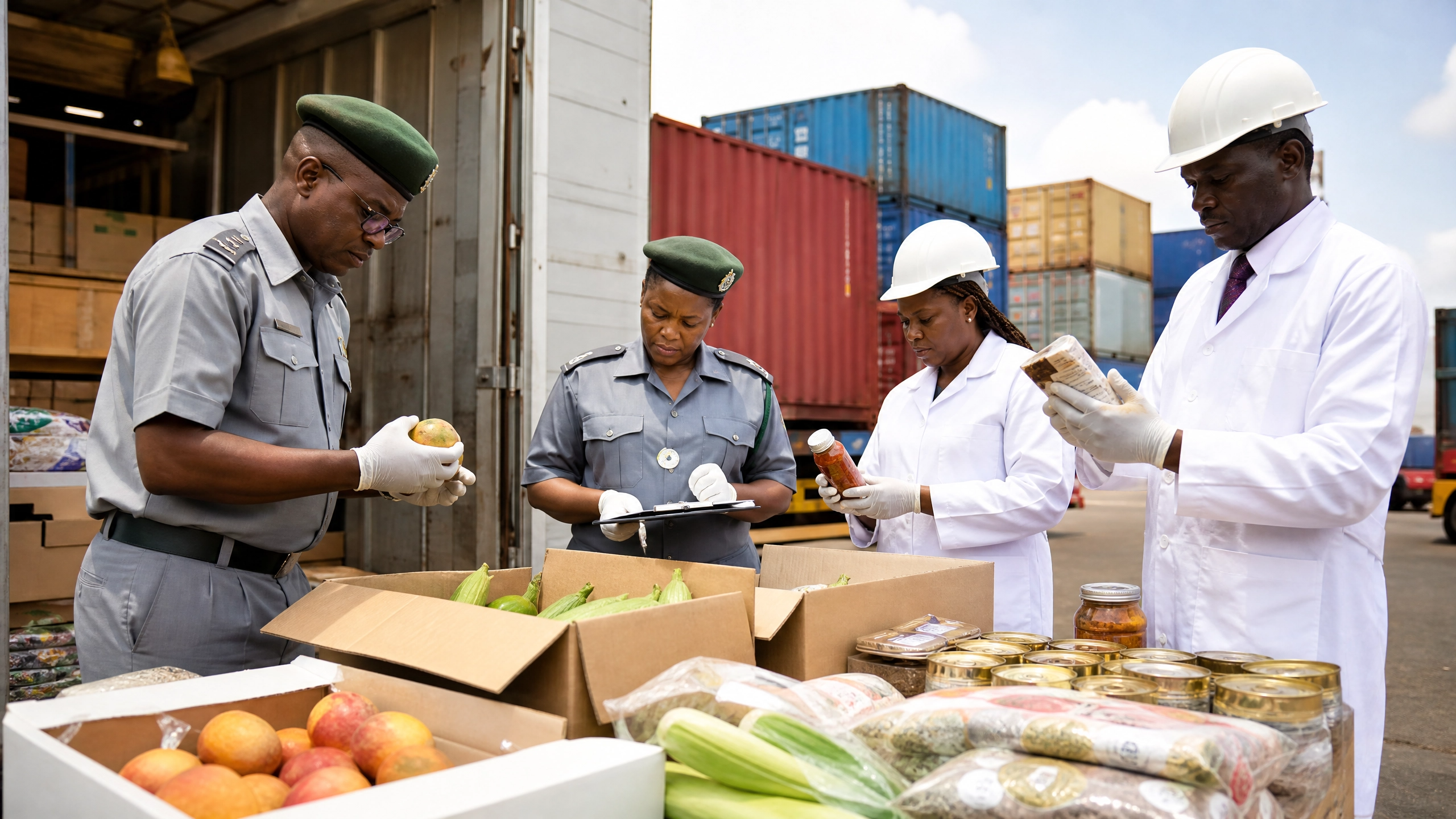
The consequences of these structural failures extend far beyond the borders of our nations. In the global market, food safety is the ultimate currency. If our trading partners do not trust our food control systems, they will not buy our products.
Blocked Exports and Trade Rejections
The European Union and the United States enforce stringent food safety standards. When African exports fail to meet these standards—often due to high levels of pesticide residues, mycotoxins, or pathogenic microorganisms—the products are rejected at the border. In 2021 alone, the EU issued 120 notifications for food from Sub-Saharan Africa that had to be rejected or removed from the market [5].
These rejections represent massive financial losses for our farmers and exporters. More importantly, they damage the reputation of the entire country. A fragmented system cannot provide the farm-to-fork traceability that international buyers demand. When the Ministry of Agriculture cannot share data seamlessly with the Ministry of Trade, the exporter is left holding the bag.
The AfCFTA Opportunity at Risk
We are currently standing on the threshold of the African Continental Free Trade Area (AfCFTA), a historic opportunity to boost intra-African trade. However, the success of AfCFTA depends entirely on mutual trust between nations. If a neighboring country cannot trust that your national food control system is effectively managing risks, they will use Sanitary and Phytosanitary (SPS) measures to block your exports.
Without robust inter-agency coordination at the national level, harmonizing standards at the regional or continental level is an impossible dream.
A Roadmap for Coordinated Food Safety Governance

The situation is urgent, but it is not hopeless. Moving away from fragmented systems requires political will, but the blueprint for success already exists. The Food and Agriculture Organization (FAO) and the World Health Organization (WHO) have provided clear guidelines for strengthening national food control systems [6].
Here is how we can begin to implement these changes practically.
Step 1: Establish a National Food Safety Coordination Mechanism
The first and most critical step is to establish a high-level coordination body. This should not be just another committee that meets once a year. It must be a legally mandated authority, ideally situated above the individual ministries (such as within the Prime Minister's or President's office), with the power to compel cooperation.
This body's primary role is to clarify mandates, eliminate overlaps, and ensure that data flows seamlessly between the Ministry of Health, Agriculture, Trade, and the Bureau of Standards.
Step 2: Transition to Risk-Based Resource Allocation
We must stop trying to inspect everything and start inspecting what matters most. A coordinated system allows for the pooling of data to conduct national risk assessments. By identifying the highest-risk foods and the highest-risk points in the supply chain, agencies can deploy their limited inspectors and laboratory resources where they will have the greatest impact on public health.
Step 3: Modernize and Harmonize Legislation
Many African countries are operating on food safety laws drafted decades ago. These laws must be updated to reflect modern, farm-to-table realities and to explicitly define the roles of each agency. Furthermore, these laws must be harmonized with international standards, specifically the Codex Alimentarius, to facilitate both regional and international trade.
Step 4: Engage the Private Sector and Consumers
Food safety governance is not just the responsibility of the government. The concept of "shared responsibility" must be central to our new systems [3]. The government sets the rules and provides oversight, but the food business operators (from smallholder farmers to large processors) must implement safe practices (GAPs, GMPs, HACCP). Finally, consumers must be educated to demand safe food, creating a market incentive for businesses to comply.
Common Pitfalls in System Reform
In my consulting work, I have seen many well-intentioned efforts to reform food control systems stumble. Here are the most common pitfalls and how to avoid them:
- Turf Wars: Ministries are often reluctant to give up power or budget. Solution: Reform must be driven from the highest level of government, framing coordination as a national security and economic priority, not a bureaucratic reshuffle.
- Copy-Pasting Foreign Models: Attempting to transplant a European single-agency model directly into an African context with a massive informal sector rarely works. Solution: Reforms must be tailored to the local context, acknowledging resource constraints and the realities of informal markets.
- Ignoring the Informal Sector: Focusing all regulatory efforts on the formal export sector while ignoring the informal markets where the majority of the population buys their food. Solution: Develop specific, supportive interventions for the informal sector, focusing on education and basic hygiene infrastructure rather than punitive enforcement.
Frequently Asked Questions
1. What is a national food control system?
A national food control system encompasses all the laws, regulations, institutions, and processes a government uses to ensure that food produced, imported, and sold within its borders is safe, of good quality, and accurately labeled.
2. Why is inter-agency coordination so difficult in food safety?
It is difficult because food safety naturally spans the mandates of multiple ministries (Health, Agriculture, Trade, Environment). Without a strong central coordinating body, these ministries tend to operate independently, protecting their own budgets and jurisdictions.
3. How does a fragmented system affect small businesses (SMEs)?
Fragmented systems subject SMEs to multiple, sometimes conflicting, inspections and fees from different agencies. This increases the cost of doing business and often discourages SMEs from attempting to comply with regulations, driving them into the informal sector.
4. What is the role of the Codex Alimentarius in national systems?
The Codex Alimentarius provides internationally recognized standards, guidelines, and codes of practice. African nations should use Codex texts as the foundation for their national food safety legislation to ensure public health protection and facilitate international trade.
Conclusion
The true cost of fragmented national food control systems in Africa is measured in lives lost, potential stunted, and economic opportunities squandered. We can no longer afford the luxury of bureaucratic silos and turf wars.
Effective food safety governance requires seamless inter-agency coordination, risk-based resource allocation, and a commitment to shared responsibility. The transition will not be easy, but it is the only way to protect our citizens, empower our food businesses, and claim our rightful place in the global agricultural market.
Need to assess your national food control system?
If your government or agency is struggling with overlapping mandates and inefficient resource use, it is time for a strategic review. Contact me for a tailored assessment of your national food control system and let us build a framework that protects public health and promotes trade.
References
[1] World Health Organization. (2026). Unsafe food causes 866 million illnesses and 1.5 million deaths annually, young children at highest risk. https://www.who.int/news/item/04-06-2026-unsafe-food-causes-866-million-illnesses-and-1.5-million-deaths-annually--young-children-at-highest-risk
[2] World Bank. (2018). The Safe Food Imperative: Accelerating Progress in Low- and Middle-Income Countries. https://www.worldbank.org/en/news/press-release/2018/10/23/food-borne-illnesses-cost-us-110-billion-per-year-in-low-and-middle-income-countries
[3] Ayalew, A., Kareem, F. O., & Grace, D. (2023). A Paradigm Shift in Food Safety for Africa. In 2023 ReSAKSS Annual Trends and Outlook Report. https://www.resakss.org/sites/default/files/2023_ator_individual_chapters/Chapter%206_ReSAKSS_AW_ATOR_2023.pdf
[4] AFRAF. (2025). DISCUSSION PAPER Strengthening Approaches to Food Control Assessment. https://afraforum.org/wp-content/uploads/2025/12/2025.12_FAfrica-AFRAF_FoodControlAssessmentPaper_v1-compressed.pdf
[5] Kimanya, M. E. (2024). Contextual interlinkages and authority levels for strengthening coordination of national food safety control systems in Africa. Heliyon, 10(9), e30230. https://www.sciencedirect.com/science/article/pii/S2405844024062613
[6] FAO & WHO. (2019). Food control system assessment tool. https://www.fao.org/3/ca5334en/ca5334en.pdf